American public institutions urgently need repair and renewal. The 2024 election was the first time since the 1800s that the incumbent party lost the White House for the third time in a row. Public trust in government has plunged to historic lows. Citizens plainly feel left behind, economically unmoored, and dissatisfied with the government that serves them.
Crisis can bring innovation. As Lincoln urged, we must “think anew.” What will matter most is not what we are against but what we are for.
This is the fourth in a series of policy agendas. The Brennan Center began with proposals to combat corruption and reform the Supreme Court and will soon offer solutions focusing on executive power. We will also put forward ideas for constitutional change and more.
Our solutions must match the scale of the challenges. They seek to address the problems of today, not 10 years ago or 1975. The project of reform must engage people from both parties, and no party. The best ideas are neither left nor right: They reflect the urgent desire of the disaffected middle.
Throughout history, reform follows scandal and crisis — often, but not always. If we act, from today’s clashes can come a time of renewal and democratic rebirth.
Michael Waldman
President and CEO
Brennan Center
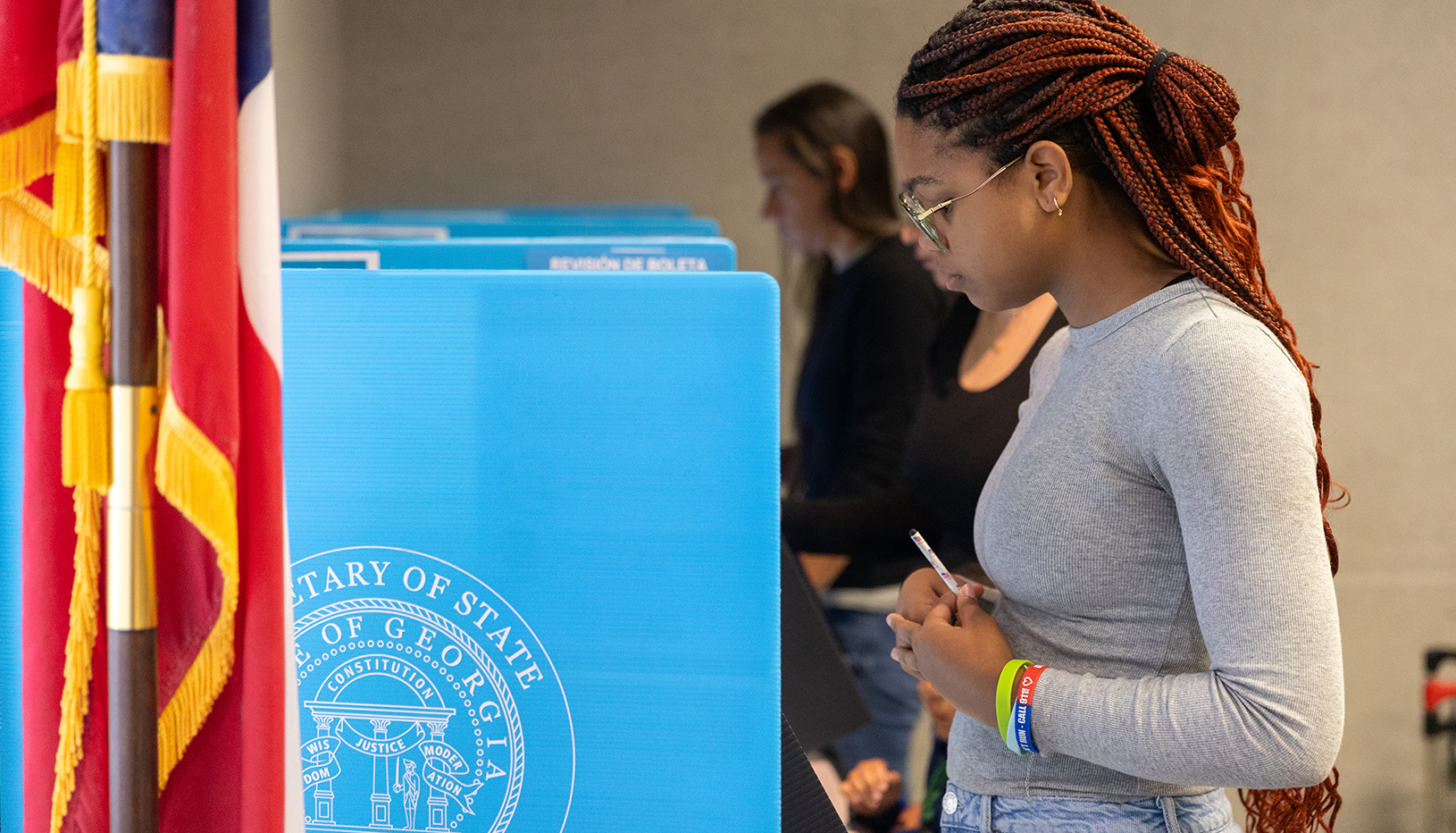
The vote is the heart of democracy and the essence of self-governance. All U.S. citizens have a right to elections that are free, fair, and secure. We need full representation in governance so that public policy addresses the needs of everyone. Elections should be modern and free from foreign interference.
The U.S. election system has long been a beacon to the world. Two and a half centuries ago, the Declaration of Independence affirmed that government is legitimate only when it rests on the “consent of the governed.” At the time, only white men who owned property could vote. Since then, Americans have widened the circle of democracy. At every step, some pushed back. But over time, those fighting to expand and protect the right to vote largely prevailed.
U.S. elections have proved remarkably resilient. In recent years, despite the pandemic, threats of violence, and disinformation, the system held. The past two presidential elections saw record voter turnout: 66 percent in 2020 — the highest since 1908 — and 64 percent in 2024.1 Americans want to vote.
The system, however, has been battered by a political assault designed to restrict the vote and diminish democracy. Voters face attacks they have not seen in half a century — from the Supreme Court, from the president, and from states.
The U.S. Supreme Court has effectively destroyed the Voting Rights Act. Shelby County v. Holder, in 2013, eliminated a key part of the law that helped block discriminatory voting policies and practices, and Brnovich v. DNC, in 2021, made it virtually impossible to challenge those practices. Since then, the difference between white and nonwhite turnout rates has grown rapidly.2 Legislatures in more than half the states have passed more than a hundred new laws restricting access to voting and suppressing votes. Louisiana v. Callais, earlier this year, made it practically impossible to enforce the Voting Rights Act’s prohibition on racial discrimination in redistricting. It left the law a dead letter.
At the same time, gerrymandering has worsened. In 2025, President Trump kindled a frenzy of partisan gerrymandering that began in Texas and soon spread across the country. Then Callais and other court rulings licensed racial discrimination and led to the elimination of Black majority districts across the South. Both parties are now locked in a retaliatory spiral aided by the Supreme Court, with redistricting wars likely to continue year in and year out. This new status quo will further limit voters’ influence over policy, crush competition, and worsen polarization in Congress.
Malevolent actors, including foreign governments, meanwhile threaten to compromise elections. Foreign agents actively attempted to influence the past several elections in the United States. In 2016, for example, Russian intelligence agencies hacked into election board infrastructure (though they did not access voting tabulation systems).3 Foreign enemies may try again this year.
And now for the first time, the federal government itself is working to undermine confidence in elections. The Trump administration has attempted to rewrite election rules to burden voters and usurp control of election systems. Baseless fraud claims circulate online, now with the support of the White House. The lies cause Americans to question election integrity and provide cover for cynical politicians who seek to profit from restrictive voting policies. Since 2020, states have passed more than 100 laws that make voting more difficult.4
Congress must act. It can respond to the Supreme Court’s misguided legal reasoning. It can forestall gerrymandering nationwide, in “red” and “blue” states alike. It can build a modern, participatory electoral system for a changing, diverse country. Under the Constitution’s Elections Clause, both states and Congress set the rules for elections. States administer them. Presidents have no role in running elections or in writing the rules that govern them. But national legislation has repeatedly proven necessary to ensure that state and local governments (and now the federal government too) do not abuse the rights of their own citizens and to reinforce equal opportunity for political participation across the country.
Repeatedly, Congress has used that constitutionally granted power to pass national laws. The National Voter Registration Act, enacted in 1993, required governments to make voter registration more widely available. The Help America Vote Act (2002) funded new voting technology after the 2000 Florida recount. The Electoral Count Reform Act (2022) clarified and strengthened procedures to certify a presidential victor. And Congress came achingly close to passing two bills that would have prevented many current voting problems. Elements of the Freedom to Vote Act and the John R. Lewis Voting Rights Advancement Act are incorporated in solutions here. Some policies, too, already work in multiple states. Those successes should be extended nationally.5
The solutions below are not intended to be comprehensive. We will continue to push for reforms beyond those listed. But achieving them would make voting fairer and more accessible for U.S. citizens and mitigate damage done by states, the executive branch, and the Supreme Court.
Endnotes
-
1
Hannah Hartig et al., “Voter Turnout, 2020–2024,” Pew Research Center, June 26, 2025, https://www.pewresearch.org/politics/2025/06/26/voter-turnout-2020–2024/.
-
2
Arless Herzig et al., “Racial Gaps in Voter Turnout Are Growing — and Undermining Democracy,” Brennan Center for Justice, March 8, 2024, https://www.brennancenter.org/our-work/analysis-opinion/racial-gaps-voter-turnout-are-growing-and-undermining-democracy.
-
3
Lawrence Norden and Kate Lurie, “Foreign Influence vs. Foreign Interference in Elections,” Brennan Center for Justice, March 27, 2026, https://www.brennancenter.org/our-work/research-reports/foreign-influence-vs-foreign-interference-elections.
-
4
Brennan Center for Justice, “State Voting Laws Roundup: May 2026,” May 19, 2026, https://www.brennancenter.org/our-work/research-reports/state-voting-laws-roundup-may-2026.
-
5
Brennan Center for Justice, “The Freedom to Vote Act,” accessed July 14, 2026, https://www.brennancenter.org/freedom-vote-act; and Brennan Center for Justice, “The John R. Lewis Voting Rights Advancement Act,” September 19, 2023, https://www.brennancenter.org/our-work/research-reports/john-r-lewis-voting-rights-advancement-act.