
You’re reading The Briefing, Michael Waldman’s weekly newsletter. Click here to receive it in your inbox.
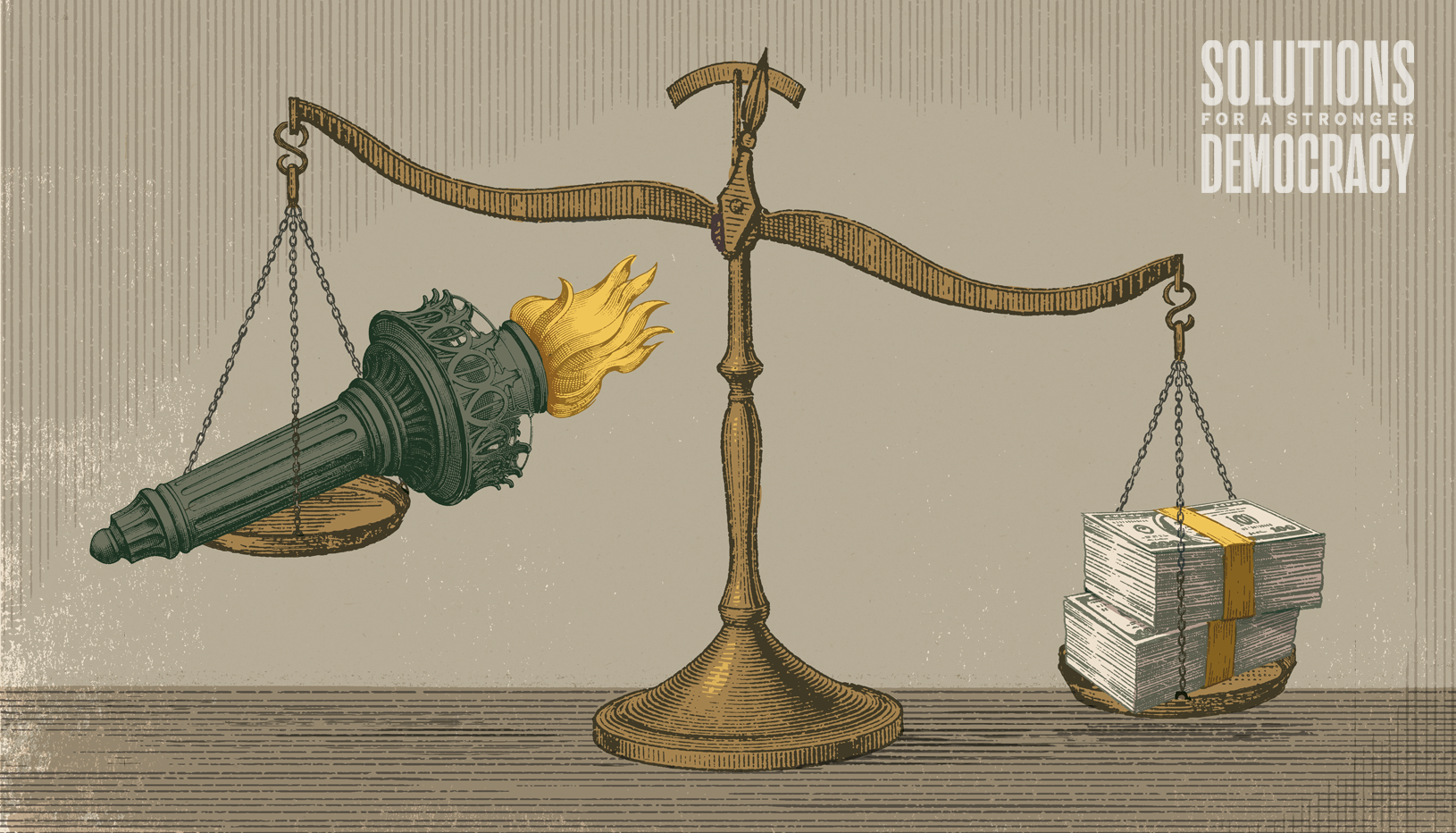
In this recent federal election, effectively there were no campaign finance laws. An astonishing amount of money came from a handful of big donors. The partisan impact was mixed: In key Senate races, it turns out, the parties spent to a tie. But voters were appalled. Ninety percent listed corruption as a top reason for their vote.
Now, maybe, politicians are listening. Rep. Hakeem Jeffries (D-NY), the presumptive next speaker of the House, announced a “bold new Democratic agenda” last week. Health care, to start with. Then: “We’ve got to get big money out of politics and end Citizens United.”
If so, this would be the first time in a quarter century that the issue took center stage.
No doubt, new lawmakers had something to do with this. The 75 Democrats (so far) in the freshman class — who style themselves the “Majority Makers” — understand the need for reform. Many ran refusing corporate PAC money. Soon, many of them will find themselves trapped on the hamster wheel of endless fundraising.
Voters understand the connection between affordability and accountability. But real action will require perseverance and true leadership.
The last time the electorate spoke loudly on the topic was in 1992. I recall it all too well, having been President Bill Clinton’s policy aide on the topic at the time. It was a big missed opportunity.
Ross Perot, an eccentric independent candidate, had won 19 percent of the vote, talking incessantly about corruption and campaign finance. Clinton took office vowing to make reform a top goal. He proposed a broad bill that included public funds for congressional campaigns. The House and Senate each passed a version but never finalized a bill to be signed.
In public, progressive Democrats demanded action. In private, they recoiled. They were incumbents above all. Soon, many were not: They lost their seats.
In 2002, Congress enacted the Bipartisan Campaign Finance Reform Act, known by the names of its Senate sponsors, Republican John McCain and Democrat Russ Feingold. A stripped-down measure to plug campaign finance loopholes, it nevertheless took six years to pass, culminating in 11 days of debate on the Senate floor. The Supreme Court gutted its provisions just eight years later in Citizens United.
The dozens of new lawmakers elected in 2018 also vowed action and pressed party leaders to advance democracy reform. The broad bill that ultimately resulted, the Freedom to Vote Act, included some money-in-politics reforms but mostly focused on other areas, such as voting standards.
This year, epic corruption and economic discontent have produced another chance.
What would reform include? The Brennan Center has proposed Nine Solutions for Political Corruption. We just issued an updated version this week.
We should have a strong, effective ban on campaign giving by federal government contractors, such as Elon Musk.
There should be an end to undisclosed dark money and full disclosure of spending and contributions.
A small donor public financing system would match the low-dollar contributions of constituents so they can be the loudest voices in the political process. Such a system now works well statewide in New York State, having been pioneered in New York City and elsewhere.
And, yes, we should absolutely reverse Citizens United and other misguided rulings. The Supreme Court gave us this dystopian world, where, as Justice Elena Kagan recently put it, “the people of America look around this political system and think that all this money chasing all these political candidates is a nightmare. And they’re right.”
How to undo the Supreme Court’s destructive rulings? We support a constitutional amendment to give Congress and state legislatures the power to enact reasonable campaign finance limits.
And we need to bring democratic accountability to the Court itself, through an 18-year term limit and binding ethics rules.
This is a big agenda. There likely won’t be one big omnibus bill combining campaign finance, voting, redistricting, and other reforms, as there was in 2022.
The Senate has long been the graveyard of reform. Lawmakers there have begun to stir. Sen. Charles Schumer (D-NY) has proposed a new anticorruption agency, and in the past, he has pushed a constitutional amendment to end dark money. Sen. Chris Van Hollen (D-MD), who is challenging Schumer to be the majority leader, recently urged a contractor ban. Strong reform will likely require action to address the filibuster, which has allowed a minority to block action for decades.
And of course, campaign finance reform requires strong presidential leadership. Joe Biden did not provide that. Neither did Barack Obama before him. (Obama was the first general election candidate to turn down public financing. He vowed to fix the system, then never proposed reform.) Now we need to demand that presidential candidates spell out what they would do to curb corruption and rein in money in politics.