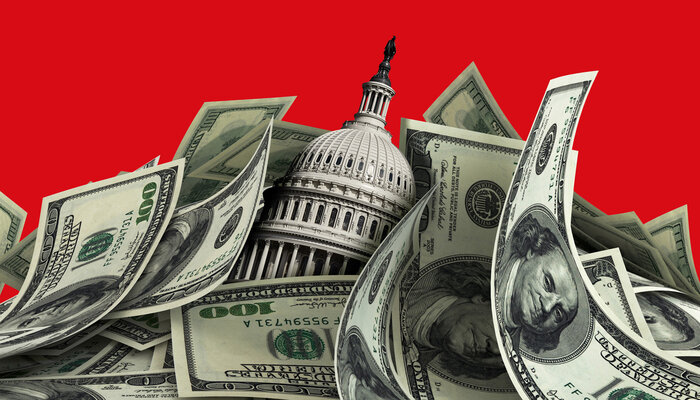



American public institutions urgently need repair and renewal. The 2024 election was the first time since the 1800s that the incumbent party lost the White House three times in a row. Public trust in government has plunged to historic lows. Citizens plainly feel left behind, economically unmoored, and dissatisfied with the government that serves them.
Crisis can bring innovation. As Lincoln urged, we must “think anew.” What will matter most is not what we are against but what we are for.
This is the first in a series of policy agendas. In coming months, the Brennan Center will offer proposals focusing on voting and representation, executive power, and the federal courts. We will set out ways to strengthen Congress. And we will put forward ideas for constitutional change.
Our solutions must match the scale of the challenges. These solutions seek to address the problems of today, not 10 years ago or 1975. The project of reform must engage people from both parties, and no party. The best ideas are neither left nor right: they reflect the urgent desire of the disaffected middle.
Throughout history, reform follows scandal and crisis — often, but not always. If we act, from today’s clashes can come a time of renewal and democratic rebirth.
—Michael Waldman
Our government has entered a new and dangerous era of corruption. This is a reason it so often fails to work, a cause of the collapse of public trust. Corruption will be a central public issue going forward. The response must be not apathy but action.
The danger today is different from at any other time in our history. In the 19th century, government was marked by self-dealing and graft. Later, in the 20th century, politics was marred by the systemic corruption of the campaign finance system. Reforms curbed those abuses. Now they have come roaring back, at the same time.
First, thanks to Citizens United and other court rulings, wealthy donors today play a virtually unlimited role in funding and even running electoral campaigns. In 2024, President Donald Trump relied on 10 individual donors for nearly half of the money raised to support his candidacy and then went on to give a number of them, most notably billionaire Elon Musk, key roles in his administration. Vice President Kamala Harris also relied on megadonors, as well as record spending by dark money groups, which do not disclose their contributors. Money in the presidential race from people who gave at least $5 million more than doubled relative to 2020 (and that is probably an understatement). Today’s moguls have influence over government undreamt of by the Rockefellers and the Vanderbilts.
We also see high-level self-dealing on an epic scale. This problem exists in all three branches of the federal government. But President Trump’s assertion of near-total control over the executive branch, which he has leveraged to grow his net worth by an estimated $3 billion since returning to office, raises the stakes enormously. Few if any of his financial entanglements are illegal, because the president — like members of Congress and the Supreme Court — is exempt from ethics rules that bind most other federal officials.
In short, Americans face a fusion of public power and private wealth to a degree not seen in the past century, if ever.
The tech industry epitomizes this transformation. Technological disruption drives wealth concentration, just as it did in the Gilded Age. Today five corporations (Alphabet, Amazon, Apple, Meta, and Microsoft) control much of the information we receive, how we shop, and how we communicate, using vast quantities of personal data collected from users. Those technology firms and two others — Nvidia and Tesla — now account for more than one-third of the value of the S&P 500, a remarkable rush of concentrated power into just a few hands. Tech billionaires have taken leading roles in the Trump administration, assumed control over major media outlets, and won favorable policy shifts and lucrative contracts while minimizing government oversight of their companies.
The federal government itself has played a key role in creating this behemoth that now threatens to control it, through special legal protections passed by Congress (such as Section 230 of the Communications Decency Act) and minimal regulatory oversight over the last three decades. Now the industry is pushing hard to have the federal government preempt states from regulating artificial intelligence, pour taxpayer funds into a national crypto reserve, and bully Europe into repealing its own significantly stronger laws, ostensibly in the name of U.S. national security. To establish real safeguards for Americans’ digital lives will require curbing the ability of the ultrawealthy to dictate policy. As with big tech, so it goes with other powerful sectors, such as fossil fuels, big agriculture, and banking.
Americans know something is wrong. Trust in the federal government hovers at or near record lows, far below the nadir of Watergate. Seventy percent of respondents in one poll said they believed corruption in the federal government was a major problem. In another survey, 80 percent said that big donors had too much influence over Congress.
Americans’ anger extends beyond disgust at cash changing hands or other quid pro quos. It encompasses a broader sense that politics and government are rigged, serving elite interests rather than solving the problems that matter to most people in their daily lives. Citizens want government to work for them, and they want everyone, from recipients of public benefits all the way up to the president of the United States, to play by the same rules and follow the law equally.
To address this crisis of confidence will require more than speeches or memes. Reform has often followed scandal — but not always. Change requires leaders to offer a compelling alternative to the status quo and then use the tools of power to enact solutions as big as the problems they seek to confront. Only then can the government begin to reclaim the public’s trust.
Outrage at Gilded Age corruption and crony capitalism sparked one of the most sustained periods of reform in our history, including the passage of new campaign finance and ethics laws, the creation of a professional civil service to end the “spoils system” for federal jobs, and two constitutional amendments to make government more accountable to the American people: the 17th Amendment, providing for the popular election of U.S. senators, and the 19th Amendment, guaranteeing American women the vote.
Another era of ambitious reform is long overdue. It should include the following solutions to combat corruption:

