

Skip Navigation
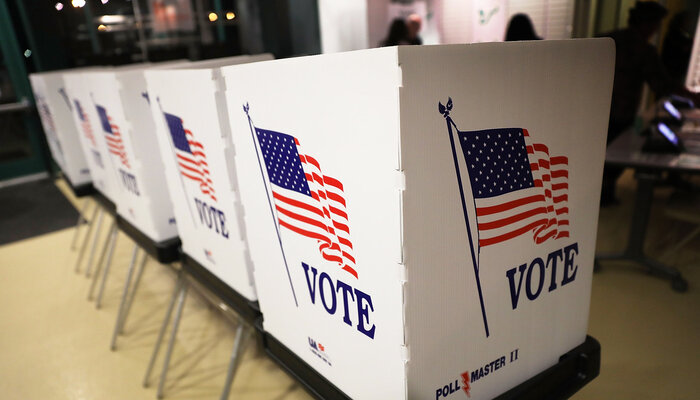
Voting booths with American flag
Joe Raedle/Getty
Expert Brief

States Already Enacting Harmful SAVE Act Policies, Requiring Proof of Citizenship to Vote

Despite the antidemocratic federal bill stalling in the Senate, new state laws that mimic parts of it will restrict voting for millions of Americans.

Voting booths with American flag
Joe Raedle/Getty
April 23, 2026

Congressional Republicans are once again prioritizing the SAVE Act, legislation that would force Americans to show documents like a passport or birth certificate to register to vote. Our research shows that 21 million American citizens lack ready access to these documents. The House has already passed yet another version of the bill, but so far it has stalled in the Senate. If the SAVE Act becomes law, it would block millions of eligible American citizens from voting.

As the Senate considers the SAVE Act, state legislatures are advancing similar “show-your-papers” policies. Florida, South Dakota, and Utah have enacted similar laws in recent weeks. Other states that already have similar laws have experienced the difficulties of implementing them.

Including Arizona, which has had a proof-of-citizenship requirement for over 20 years, 5 states will have a show-your-papers requirement for all voters for the 2026 midterms: Arizona, New Hampshire, South Dakota, Utah, and Wyoming. A sixth state, Louisiana, has one on the books that it has not yet implemented.

State legislatures have recently passed three types of legislation, all premised on false claims about noncitizens on voting rolls:

  • Laws that require every applicant to present a passport, birth certificate, or other citizenship documentation when they register to vote

  • Laws that require some voters to present a passport, birth certificate, or other citizenship documentation, in some cases as a backstop after election officials verify applicants’ citizenship by cross-checking other data sources, a process that inevitably misidentifies some people as noncitizens because of flawed data
  • Laws that call for aggressive purges using methods that will remove some eligible American citizens from the rolls

Recently Enacted State Show-Your-Papers Laws

New Hampshire instituted a requirement in 2024 for all in-person registrants to show a passport, birth certificate, or other document indicating citizenship when registering to vote. Last year, the state expanded the requirement to registering by mail.

New Hampshire’s laws have already led to widespread confusion and eligible Americans not being able to vote. In town elections in 2025, voters and poll workers contended with various issues, including married women who could not register because they didn’t have their marriage license reflecting their name change on hand. At least one woman had to come back three times, while others couldn’t register at all. The state had to pass a cleanup law last year to help poll workers deal with confusion. That law requires polling places to have real-time access to state databases, a useful system but one that takes time and expense to roll out.

Wyoming enacted a proof-of-citizenship law in 2025. In addition to a passport, birth certificate, naturalization paper, or military card, it allows people to use driver’s licenses so long as that license doesn’t indicate the holder is a noncitizen. The state began putting such marks on new driver’s licenses in 2025. Unlike the SAVE Act, any U.S. citizen with a driver’s license can satisfy Wyoming’s new law.

New Hampshire and Wyoming are two of just six states that are exempted from a federal law that prohibits a proof-of-citizenship requirement to register to vote in federal elections. The National Voter Registration Act requires the availability of a voter registration form for federal elections on which applicants swear under oath that they are citizens but aren’t forced to provide a document to prove it. As a result, 44 states could have a show-your-papers law only for state elections. The law doesn’t apply to Idaho, Minnesota, New Hampshire, Wisconsin, and Wyoming because they have had election-day registration since the law’s passage in 1993, or North Dakota because it doesn’t have voter registration.

In practice, “bifurcating” voter rolls means states would need to keep one set of voter rolls for use in federal elections and another set of voter rolls for use in state elections. They would also have to print distinct ballots for voters on each set of rolls in any election that involves both federal and state races. Creating and running these systems are costly and complex to manage, which is why Arizona is the only state that undertook it before 2025.

The need to bifurcate looms over most states considering these laws. This year, South Dakota and Utah and enacted laws that only apply to state elections. They require a passport, birth certificate, tribal ID, or driver’s license with a U.S. citizenship notation on it (which few people currently have) to vote. Concerningly, they don’t appropriate funds to develop new voter roll systems and purportedly take effect for the 2026 midterms. Utah’s effort to pass its bill was surprising, as the lieutenant governor recently announced that the state found only one noncitizen on the rolls out of around 1.8 million active voters.

Louisiana passed a show-your-papers law in 2024 that left all the details to the secretary of state. Although this law has technically been in effect for almost two years, the secretary of state’s office has not taken steps to implement it. The registration form on the secretary’s website doesn’t even reference the need for citizenship documentation.

A few other states have previously tried to impose similar laws without success. Kansas had a similar law struck down by a court in 2018; it prevented more than 30,000 American citizens from registering to vote before that order. Alabama and Georgia have policies on their books that aren’t in effect because of court orders as well.

Recently Enacted Related Laws

Indiana, Ohio, and Mississippi enacted show-your-papers laws that apply to some voters in 2025. Indiana’s requires people who register using a temporary ID, such as asylum seekers or people on residence or work visas, to present a passport, birth certificate, or naturalization papers. Ohio — which snuck its provision into a late version of a transportation law — added a proof-of-citizenship requirement for anyone registering or updating their registration at the DMV. The law doesn’t say what documents would suffice, although guidance from the secretary of state suggests driver’s licenses that don’t have noncitizen marks, birth certificates, passports, and naturalization papers satisfy the new law.

Mississippi already required voter registration applications to be checked against Department of Public Safety data. Anyone identified in the the Department of Public Safety’s system as a noncitizen had their information run against federal citizenship data (through the Department of Homeland Security’s confusingly named SAVE program). If the SAVE program deemed that person a noncitizen, local registrars had to send them a notice that they need to provide proof of citizenship to be registered. A new law this year also requires people without driver’s licenses to have their information compared to federal citizenship data accessible through the SAVE program. Because that program doesn’t have complete citizenship data, some eligible citizens who don’t drive will need to provide a citizenship document.

In 2023, North Dakota enacted a similar law. North Dakota has no voter registration; instead, voters show ID at the polls. Under the new law, voters cannot use an ID with a noncitizen mark on it, which the state includes on driver’s licenses and other IDs. Any eligible voter who has an ID with a noncitizen mark (e.g., recently naturalized citizens) must acquire an updated ID reflecting their U.S. citizenship and bring it to an elections office within 13 days of the election for their vote to count.

In 2025, Tennessee enacted a law that, rather than impose a proof-of-citizenship requirement on all voters, obliges the state coordinator of elections to create a citizenship verification system by January 2028 for use by county officials. The law leaves the details to the officials. It’s not clear from the new law or existing statutes what proof eligible U.S. citizens will need to appeal if their application is improperly rejected.

On April 1, Florida’s governor signed a citizenship verification measure similar to Tennessee’s that would require all registration applications to be compared with department of motor vehicles’ citizenship records. Anyone who can’t be verified as a citizen, which will include some naturalized citizens and citizens without driver’s licenses, will be registered as an “unverified voter” and can only have their vote count if they show a passport, birth certificate, naturalization paper, or another government-issued photo ID that indicates U.S. citizenship. The law, whose proof-of-citizenship provisions go into effect in 2027, doesn’t contain a carveout for federal elections.

Recently Enacted Purge Laws

Several states have enacted laws that seek to aggressively remove alleged noncitizens from the rolls. Voter list maintenance is important. But when it is done too broadly, eligible American citizens who followed all the rules can be disenfranchised.

Arizona, Indiana, and Kansas have enacted laws in the last few years to require election officials to compare voter files with DMV citizenship records and remove voters identified as possible noncitizens. The states did not institute adequate safeguards to keep American citizens on the rolls. Although all except the Kansas law require officials to send cancelled voters a notice, such comparisons can leave a gap: Some people become citizens after getting their driver’s licenses. They may not return to the DMV and update their citizenship status until their licenses expire years later.

Arizona, Idaho, Mississippi, Utah, and Wyoming have passed laws since 2022 that oblige state officials to compare voter rolls with SAVE program data and remove voters flagged as noncitizens. However, the SAVE program doesn’t include information on all U.S. citizens and recent changes increase the risk of misidentifying individuals.

A 2025 Iowa law creates an “unconfirmed” registration status when officials receive information from a “reliable” source that a voter is a noncitizen. People can confirm their status by providing “evidence” of citizenship. And in 2022, South Carolina began to allow voter purges based on information from state or national public safety databases indicating someone isn’t a citizen. Officials don’t have to notify affected voters. These laws, which codify the use of incomplete or flawed data, risk purging eligible American voters.

•  •  •

Show-your-papers policies block eligible American citizens from participating in our democracy. They are also expensive and difficult to implement, requiring the creation of complex systems, new forms, and election worker trainings to track additional documentation. They upend popular and longstanding methods of voter registration including by mail, online, and at voter registration drives. New Hampshire’s issues in low-turnout local elections in 2025 demonstrate the dangers of these laws.

Even supporters of these laws seem to recognize they create significant hurdles. The challenges of developing and running these systems may have played a role in defeating the Texas legislature’s 2025 push for a passport or birth certificate law. Election administrators warned it would cost millions of dollars, create a surge in provisional ballots, and force counties to undertake large-scale data comparison and management efforts. That’s a lot of strain on the election system to solve a problem that doesn’t exist. The U.S. Senate would be wise not to inflict those obstacles on every election official nationwide.