
You’re reading The Briefing, Michael Waldman’s weekly newsletter. Click here to receive it in your inbox.
Election upsets can scramble political expectations. This time, it might be one halfway around the world. In Hungary, Péter Magyar won a landslide victory over autocrat Viktor Orbán on the issue of corruption. After he won, he vowed Hungary would no longer be “a country without consequences.”
As if shaken awake, the media and politicians in our own country have suddenly noticed the corruption issue.
The New Republic mocked the other day, “Across the media landscape, the chattering class has assayed the election and made what is — to it, anyway — a fresh discovery: What if political corruption is bad? And what if campaigning against corruption is a winning issue?”
The American public is already there. A YouGov poll in January, for example, found that “large shares of both Democrats and Republicans think their party focuses too little on corruption.” Indeed, backers of both parties thought corruption was the biggest issue being ignored.
My reaction to this is: wow, yes! Voters have their heads screwed on right. And also, how do they even know about the growing corruption problem? Long gone are the days when newspapers competed to expose official wrongdoing. Trust me, there is nothing in today’s fragmented information landscape that is like past scandals pursued by dogged hordes of investigative reporters and orating TV correspondents.
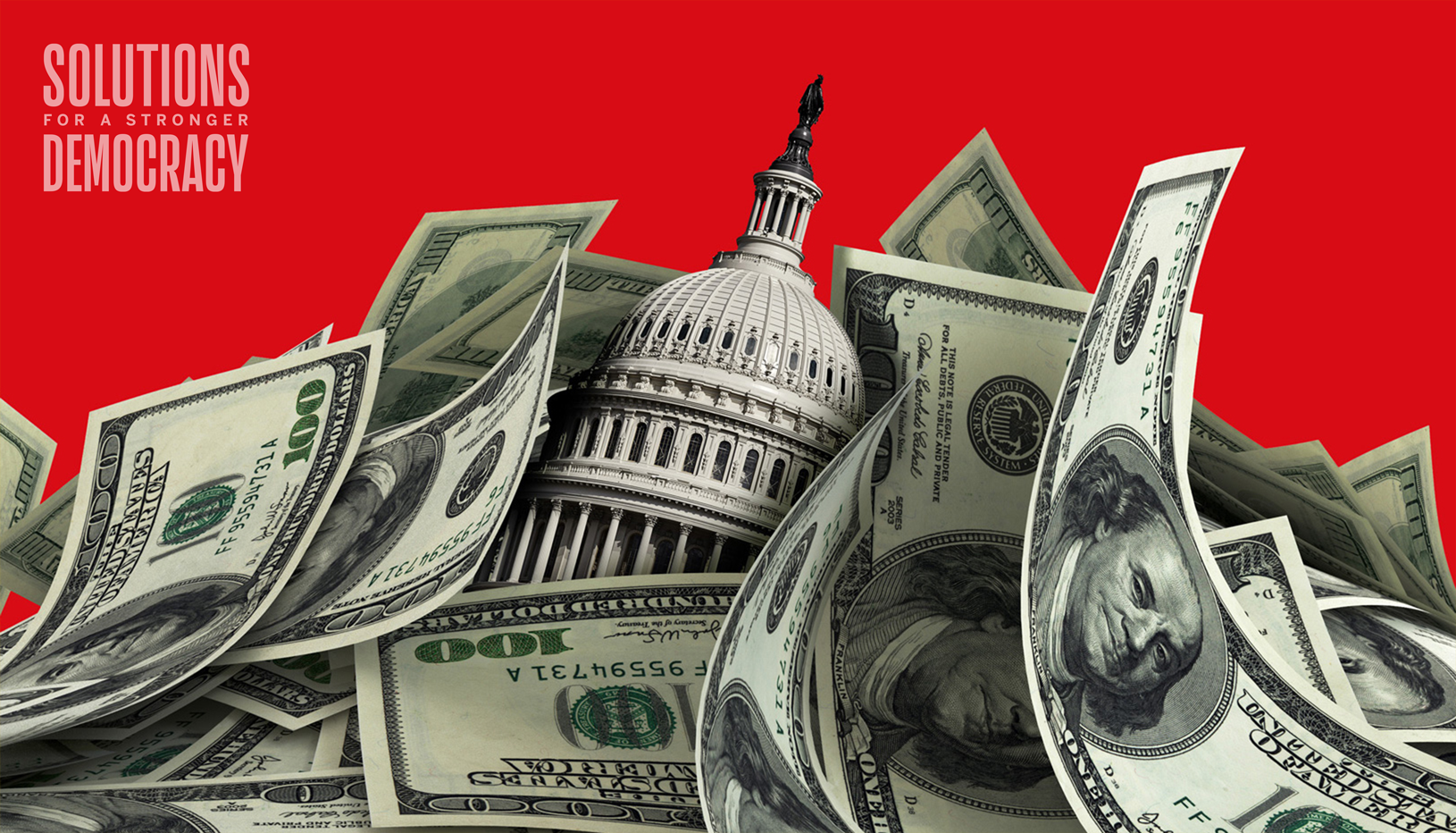
Journalists fuss over candidate fundraising totals without mentioning that, for example, a single super PAC backed by the AI industry has already raised $75 million to spend in congressional races. That still falls behind the $171 million raised so far by a single cryptocurrency industry PAC. This spending will all be “independent,” and much of it will not be fully disclosed. Yet, with spending like this, these industries could effectively buy Congress.
Then there’s the orgy of self-enrichment. Forget the planned White House ballroom or the gilded doorknobs in the Oval Office. According to Forbes, President Trump and his immediate family increased their net worth by $3 billion in one year by leveraging public power. Other analyses peg the one-year amount at $1.4 billion.
Opposition politicians have started to pound away. But it’s not enough to decry sleaze. Jaded voters think “everyone does it.” Indeed, the group End Citizens United in 2025 published a poll suggesting citizens thought Democrats were more corrupt than Republicans.
House Democrats recently announced a task force to assemble an anticorruption agenda. Rep. Joe Morelle of New York leads the drive. When I spoke with Morelle months ago, he vowed, “This is going to be the most significant governmental reform since Watergate.”
That’s a high bar. Watergate led to laws to curb presidential abuse and clean up politics: A public financing system sought to curb big money in presidential campaigns. The Inspector General Act of 1978 placed watchdogs in major federal agencies. The Budget Impoundment and Control Act aimed to ensure that Congress, not the president, retained power of the purse. The War Powers Act tried to curb executive warmaking.
After scandal comes reform. Not always, but that’s when it happens. What would a reform agenda look like today?
In January, the Brennan Center published Nine Solutions for Political Corruption. We call for a ban on undisclosed “dark money” in campaigns, a ban on campaign donations from big government contractors, small donor public financing for congressional races, and a constitutional amendment to overturn the Supreme Court’s calamitous rulings in cases such as Citizens United. As for graft and grift, federal ethics rules should at long last apply to presidents. The Constitution should be amended to take away a president’s unilateral power to issue corrupt pardons.
And here’s something that would be a pleasant surprise: a real ban on congressional stock trading, a practice that has led to suspiciously outsized profits for both Democrats and Republicans.
A reform response can’t stop with punishment for grafters. There should be a nationwide ban on partisan gerrymandering. Term limits for Supreme Court justices. A curb on abuse of executive powers. Expect to hear from us on all these topics and more in our upcoming Solutions series.
An assault on corruption can unify. It unites voters from left and right, as well as those from the exhausted middle who are sick of politics that never seems to produce results.