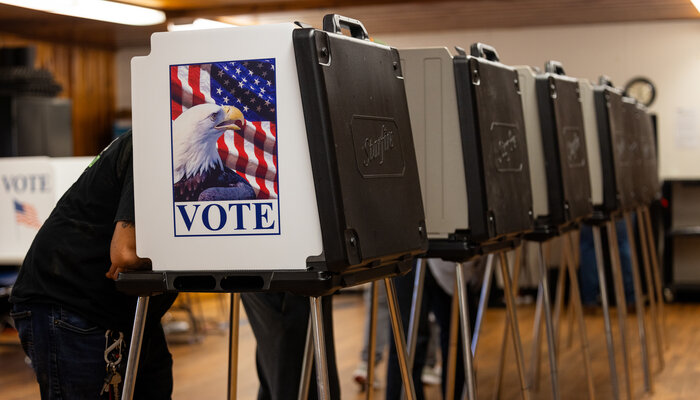

The Missouri Supreme Court in March rejected parts of a 2022 state law that would have made it harder for groups like the League of Women Voters and NAACP to conduct voter registration drives.
The court in League of Women Voters of Missouri v. State held that the challenged provisions restricted core political speech, triggering application of strict scrutiny, a standard courts use to analyze laws that threaten the most fundamental rights. In so doing, it became the latest state high court to decline to apply the “relatively feeble” federal test for evaluating laws burdening the right to vote, known as Anderson-Burdick. Other state courts also have held voting restrictions must survive strict scrutiny — but have done so by holding that the right to vote is fundamental. Together, these decisions provide an illustrative path to vindicate voting rights in state courts.
In the last week of the 2022 legislative session, the Missouri Legislature passed H.B. 1878, which contained sweeping changes to state elections law: It prohibited individuals who “solicit” voter registration applications from being paid; required individuals who “solicit” more than 10 voter registration applications to register with the state; required such individuals to be registered Missouri voters over the age of 18; and prohibited anyone from “solict[ing] one into obtaining an absentee ballot application” — all without defining the word “solicit.” These prohibitions were backed by harsh criminal penalties.

