
You’re reading The Briefing, Michael Waldman’s weekly newsletter. Click here to receive it in your inbox.
Confidence in government has plunged to historic lows, a trend that long predated Donald Trump. According to Pew Research, only 17 percent of Americans trust the federal government to do what is right always or most of the time. The 2024 election was the first since the 1800s in which the incumbent party lost the White House three times in a row. There’s a deep disquiet. Citizens plainly feel left behind, economically unmoored, and dissatisfied with the government that serves them.
Populist and nationalist politicians have tapped into this anger. We who want a stable, multiracial democracy need to be just as audacious in our own response. What will matter most is not what we are against but what we are for. Hence the need for a new, bold reform agenda.
When the Constitution and rule of law are under assault, is it really the time to think about the future? When the barbarians are at the gates, is it time for city planning? I think emphatically yes. Pointing to a better future is an essential part of pushing back against nihilism and abuse. And crisis can impel innovation. As Lincoln said, this is when we must “think anew.”
That’s why the Brennan Center is launching a series of policy agendas aimed at making our leaders more accountable and our government more responsive.
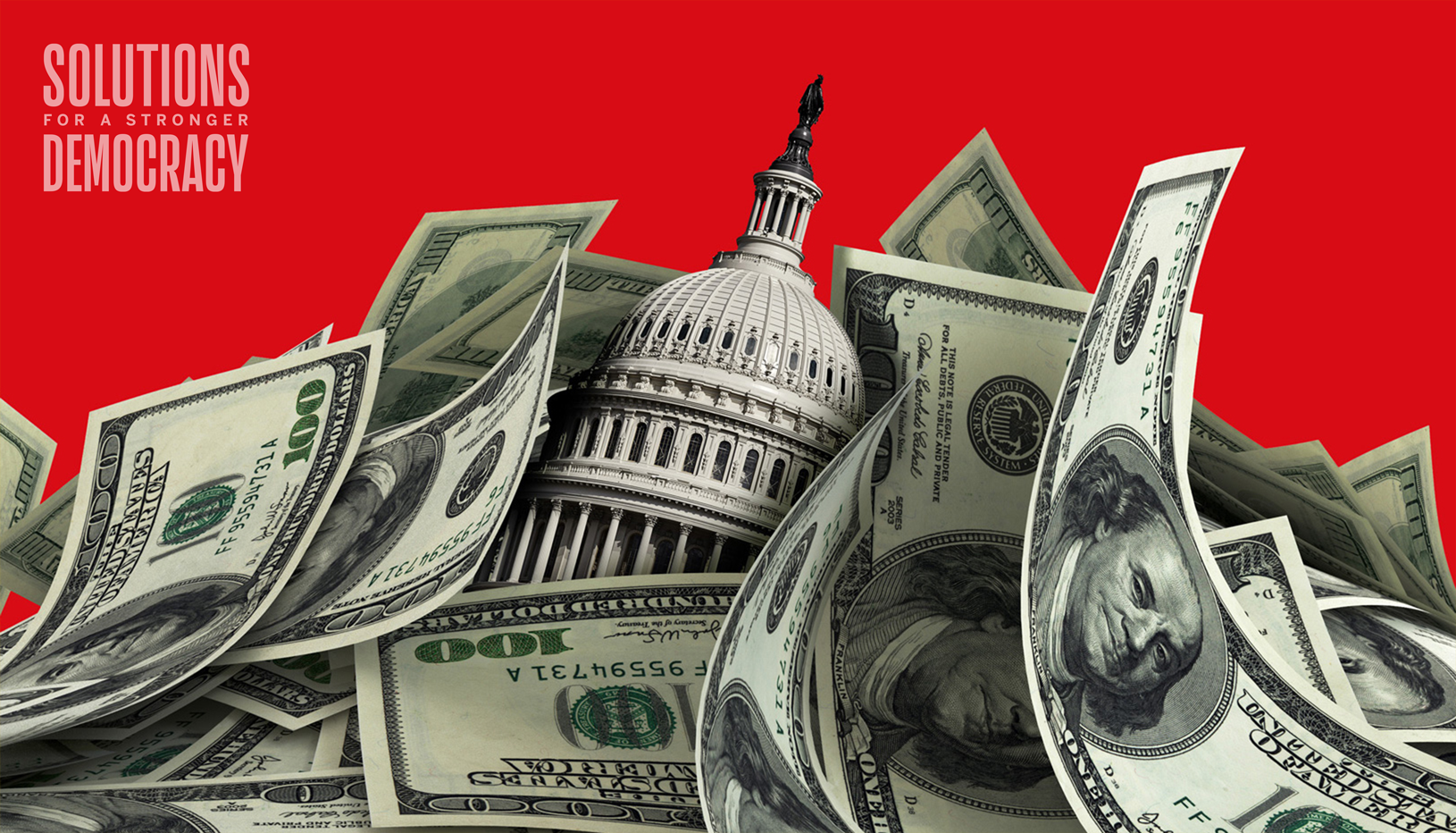
We start today with “Nine Solutions for Political Corruption.” Once, American politics was marked by graft and self-dealing (think of Tammany Hall in the early 20th century). Later, it was dominated by the systematic corruption of the campaign finance system. Now both have roared back. We are experiencing a fusion of private wealth and public power not seen since the Gilded Age, if ever. It all reinforces the sense that politics is serving elite interests rather than solving problems that matter to people’s daily lives.
So this new policy agenda includes major changes to the role of money in politics. We call for a constitutional amendment to undo a half-century of misguided Supreme Court rulings, such as Citizens United, which have wrecked the campaign finance system. We propose a new law that would curb big campaign contributions from federal contractors. We put forward proposals to end undisclosed “dark money” in elections, and for small donor public financing so candidates can run without being dependent on big donations. All this is not out of the realm of possibility. The Freedom to Vote Act, which would have banned dark money in elections, came achingly close to passage in 2022.
Washington, DC, has also seen a return to earlier forms of corruption, of personal pocket-lining, graft, and abuse. According to Forbes, President Trump’s net worth has grown by $3 billion since he returned to office. His financial entanglements may be legal, because the president — like members of Congress and the Supreme Court — is exempt from ethics rules that bind most other federal officials. This glaring gap in the law has allowed Trump to profit off the presidency. It must be closed.
Our new agenda sets out ideas for a dramatic overhaul of ethics laws. Presidents should be required to divest their assets. Members of Congress must be prohibited from stock trading. Supreme Court justices should follow a binding ethics code. And we must establish a new, independent government ethics agency responsible for enforcing ethics rules. Nobody is so wise that they can be the judge in their own case.
We discuss a big constitutional change that we think makes sense, too. The unlimited power to grant pardons is a power borrowed from King George III. Make no mistake: There must be a place for mercy in an often unfair and racially discriminatory federal criminal justice system. But in recent years, unfettered presidential pardon power has become a machine for corruption. It was bad enough when President Biden pardoned his son. Now Trump has pardoned campaign contributors, January 6 insurrectionists . . . pretty much every white-collar criminal he finds. Combined with the Supreme Court’s decision granting presidents wide immunity from prosecution, the opportunities for abuse are endless.
So we should amend the Constitution to take away the president’s unlimited pardon power. I think the best response would be structural, to create a pardon board to review pardons or to give Congress a role. But something big must be done.
In the coming months, we will propose ways to bolster voting and representation. We will talk about the Supreme Court. We will outline strategies to curb abuses of executive power. We will look at how to restore the role of Congress in our system. And we will discuss constitutional change.
The greatest risk now is not overreach, but that we will think too small.
In the long history of the country, reform has followed scandal — often, but not always. It happened after the Gilded Age, in the sweeping changes of the Progressive Era. It happened, too, after Watergate, when laws ranging from new campaign finance rules to curbs on presidential war powers were enacted.
These earlier eras had several things in common. Citizens saw the connection between political decay and economic dislocation. The response came at every level of government and often involved both parties. The media of the time played a significant role (which would be a challenge today). And it was active citizens who pushed those in power to act.
If we do our part, we can help make this challenging moment the start of a new era of renewal for our country.