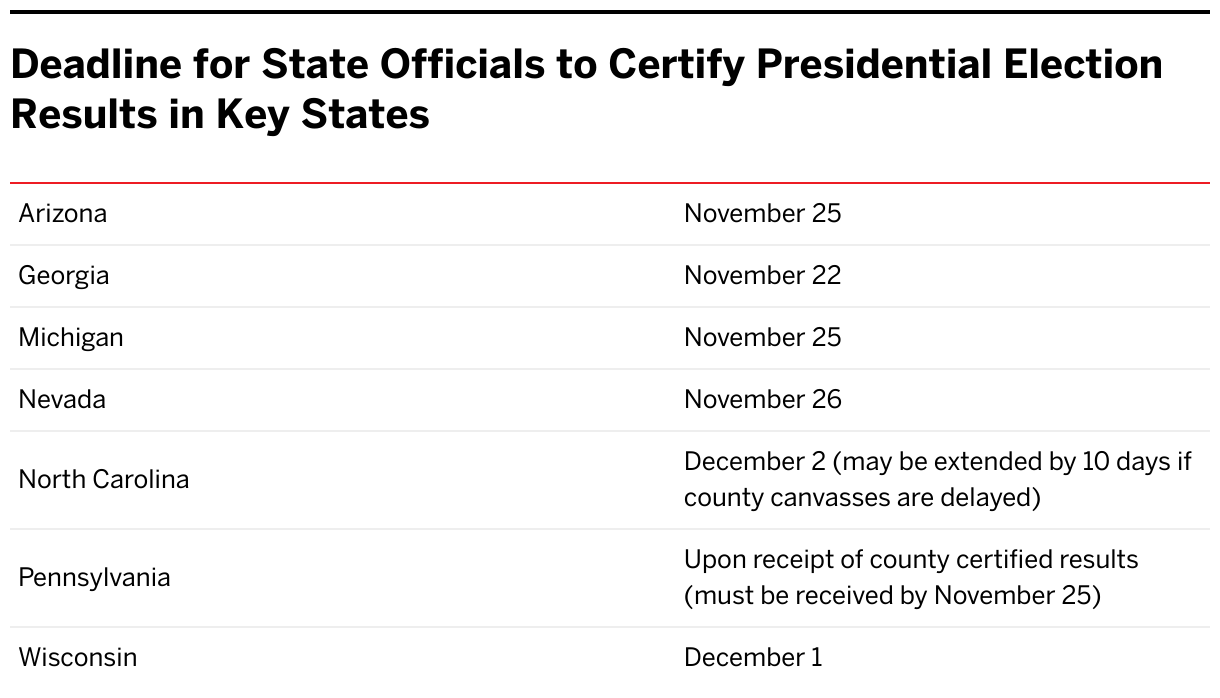



The results that you see on election night coverage are not final and official results. They are instead a combination of unofficial results reported by election officials and news organization projections. The full process for counting votes involves a series of steps that take place over the course of weeks. After these multiple checks ensure the accuracy of the results, the process ends when officials certify the election, as required by law.
Each of these steps has safeguards in place to protect the rights of voters and the integrity of our elections. They are conducted in public; representatives from both parties, citizens, and the media can observe that they are done properly. At each step, voters, candidates, and other interested parties can go to court to enforce these safeguards if needed.
This guide explains the key steps that election officials will go through to accurately determine and sign off on the final results of the election. The steps are generally explained in chronological order, but it is important to know that timelines vary by state and that many of these steps take place concurrently. And while our election systems have many safeguards to protect against fraud and disenfranchisement, this guide is specifically focused on the administrative steps that election officials take to ensure a secure and accurate vote count.