
The cyclospora outbreak has sickened tens of thousands of people, causing at least two deaths and hundreds of hospitalizations. It is one of the largest foodborne outbreaks in U.S. history. But it is not only a story about food safety. After intense lobbying from the food industry — which regularly spends millions on political donations — Congress delayed already long-overdue safeguards that might have helped contain the outbreak more quickly. The ongoing controversy illustrates the challenge posed by undue influence, which most Americans see as a form of corruption and which is undermining their confidence in our political system.
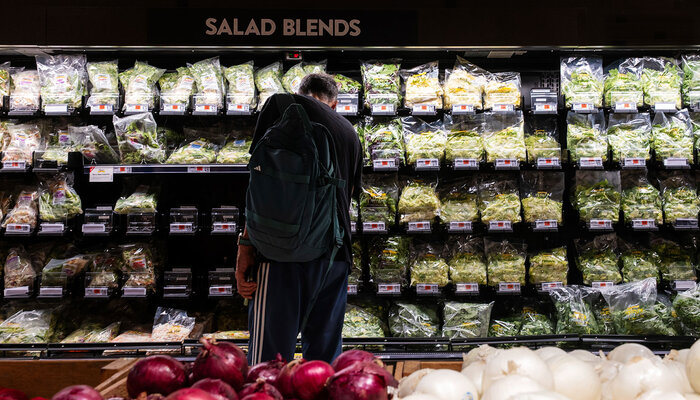
Since May 1, the Centers for Disease Control and Prevention has received reports of over 24,000 confirmed or suspected cyclospora infections, compared to a little over 1,000 confirmed cases during the same period in 2025. The outbreak has been traced at least partly back to contaminated lettuce grown by Taylor Farms, a produce company that supplies major supermarkets and fast-food chains. The contaminated lettuce appears to have made its way from one or more farms in Mexico to food sold at Taco Bell locations in at least five states, from where the outbreak spread across the country.
Time is of the essence in containing any outbreak of foodborne illness, which requires pinpointing the source of contamination. Media reports citing a number of food safety experts have pointed to delays by Taco Bell in providing supply chain information to state and federal investigators as a factor that made it harder to trace the initial cyclospora outbreak back to Taylor Farms lettuce, which may have allowed the outbreak to spread more widely. (Both Taco Bell and Taylor Farms maintain that they fully cooperated with state and federal authorities.)
The need for speed in tracing foodborne illnesses is hardly unknown. Back in 2011, Congress passed a law that requires producers and distributors of foods that are known vectors for contamination, including lettuce, to keep enhanced records documenting where ingredients were sourced so that outbreaks can be quickly traced. Incredibly, however, the Food and Drug Administration rule implementing these requirements — the “food traceability rule” — has still not been put into effect.
The most recent delay was cemented by a House rider adopted in the budget deal that ended the 2025 government shutdown. It was one of several provisions in the deal that weakened food safety rules following sustained lobbying from the foodservice industry. Under the terms of the rider, the FDA cannot spend any money to implement the traceability rule until July 2028 at the earliest, 17 years after Congress first passed the underlying law. While the length of this delay can be attributed to multiple factors, industry pressure plainly was one of them — and appears to have played an especially prominent role in recent years when it became clear that the FDA was finally moving forward with a rule.
Food industry lobbying is backed by significant campaign spending. Individuals and PACs associated with industry trade associations and specific companies give millions to federal candidates from both parties every cycle.
Thanks to Citizens United and related court rulings, food companies can also make large donations to nominally independent super PACs that are closely tied to candidates. The parent company of Taylor Farms, for instance, donated $1 million to President Trump’s super PAC, MAGA Inc., in 2025 and another $1 million to the main super PAC backing House Republicans. Other industry-connected donors have also cut large checks to super PACs and to the national political parties, which court decisions have allowed to also accept donations in the hundreds of thousands or even millions of dollars. Food companies further have the option to give unlimited amounts in secret through dark money groups that do not reveal their donors, which spent almost $2 billion in the 2024 cycle.
Campaign spending is not the only type of political giving that major industries can use to ingratiate themselves with those in power. Another increasingly common tactic is to give generously to presidential inaugural funds. The food and beverage industry ranked fifth among the top twenty industries that contributed to Trump’s second inauguration.
All this giving is legal, and it is hard to tie the traceability rule’s delay to any specific donation. But the bigger truth is that massive political spending is an avenue for the sort of undue influence that most American voters view as corrupt and which they believe has a direct negative impact on their lives, as shown in a recent Brennan Center poll. The food industry’s success in delaying safeguards that could have mitigated the effects of a deadly foodborne outbreak is a perfect example of why the public feels this way.