Resource
North Carolina: Protections Against Intimidation of Voters and Election Workers
This resource details state and federal laws protecting against the intimidation of voters and election workers and the disruption of the voting process.
Part of
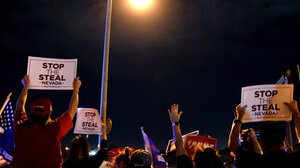
Voters in North Carolina have the right to vote free from intimidation under federal and state law.1 The federal protections that apply to all states are explained here. The following actions are specifically prohibited by North Carolina law:
- Interfering or attempting to interfere with any voter who is inside the voting enclosure or marking their ballot,2
- Inducing a voter to show how they marked their ballot,3
- Providing false information to the public to intimidate or discourage potential voters from voting,4
- Photographing, videotaping, or otherwise recording the image of voters within the voting enclosure,5
- Using force or violence to stay or interfere with the holding of an election,6
- Intimidating a voter on account of how the voter may vote, may not vote, or may have voted,7 and
- Hindering access, harassing others, or otherwise engaging in election-related activity in the voting place or buffer zone around it.8
The information below addresses the laws that serve as guardrails against specific threats of intimidation.
Voter Challenges
Although North Carolina permits any registered voter to challenge the eligibility of another voter of the same county,9 state law also provides for some guardrails:
- Challenges cannot be made indiscriminately and may only be made if the challenger knows, suspects, or reasonably believes the person is not entitled to vote.10
- A challenge can only be sustained if it is substantiated by affirmative proof. Otherwise, there is a presumption that the voter is qualified.11
- When a challenge is made on Election Day or during early voting, a hearing must be held on the same day.12
- If the voter takes an oath and provides any required proof of identity or residency, and the challenger has not provided affirmative proof of the voter’s ineligibility, the challenge must be denied, and the voter must be allowed to vote a regular ballot.13 If the election judges find affirmative proof that the voter is unqualified to vote, the voter must be allowed to vote a challenged ballot.14
The National Voter Registration Act (NVRA) provides additional safeguards to protect voters from mass challenges before an election:
- The NVRA expressly recognizes that National Change of Address information is not sufficient on its own to serve as the basis for canceling a voter’s registration.15
- The NVRA prohibits the systematic removal of voters from the rolls within 90 days of a federal election.16
More information about the limitations and process for voter challenges in North Carolina can be found here.
Intimidation of Poll Workers and Election Officials
In addition to federal protections against the intimidation of election workers, it is a misdemeanor in North Carolina to interfere with any election officer or member of any board of elections while they are performing their duties; to disturb any member of any election board or any chief judge or judge of elections in the performance of that person’s duties; or to impersonate a chief judge, judge, or other precinct official while they are discharging their duties.17 It is a felony to intimidate or threaten an election official. It is also a felony to assault an election official while they are carrying out their duties in conducting an election.18
Voter Intimidation by Poll Workers
Information about the rules and constraints on poll workers in North Carolina can be found here.
Intimidation by Election Observers
In addition to North Carolina’s voter intimidation laws detailed above, state law places limits on who may serve as an observer and what they may and may not do:
- Observers may be appointed in advance of the election by the chair of a county political party, the chair of a state political party, or an unaffiliated candidate or their campaign manager.19
- No more than three observers from the same party may be in a polling location at the same time.20
- Observers are required to wear an identification tag or badge while they are observing.21
- The county board of elections or chief judge of a polling place may challenge the appointment of an observer for “good cause, which shall include evidence that the observer could impact the conduct of the election.”22
- Observers are prohibited from looking at, photographing, videotaping, or otherwise recording the image of any voter’s marked ballot; impeding the ingress or egress of any voter into the polling place; interfering with any election official in the performance of their duties; engaging in electioneering; or making or receiving phone calls.23
Election workers are responsible for enforcing peace and order at a polling place and may eject observers who engage in prohibited conduct.24
Guns, Law Enforcement, and Federal Agents at Polling Places
North Carolina law limits the carrying of guns in a number of places that are commonly used as polling places, including schools and courthouses.25
Even in places where carrying a firearm is not expressly prohibited, doing so may constitute unlawful intimidation.26 Such conduct may consist of:
- Carrying a visible firearm while near a polling location or at a drop box or vote-counting site,
- Displaying a concealed firearm during a discussion or argument with a voter or election worker, or
- Approaching a voter or election worker while displaying a firearm.
Precinct election officials may call on law enforcement to aid them in enforcing the law. Officers must obey any lawful order made by the precinct election officials in the enforcement of the election laws.27
Federal law further limits the presence of the military and other armed federal agents at polling places:
- It is a felony for any federal official to send troops or armed persons to a polling place, “unless such force [is] necessary to repel armed enemies of the United States.”28
- It is a felony for a member of the military to intimidate voters or interfere with elections.29
Door-to-Door Intimidation
North Carolina law and federal law prohibit canvassing efforts that are used to intimidate voters. The state board of elections issued a statement in February 2022 in response to private individuals knocking on doors to collect information from voters about the 2020 election. The statement reminded voters that they need not disclose any private information, such as their voting record, to anyone who comes to their home. In addition to the federal laws prohibiting voter intimidation, North Carolina law provides further safeguards to protect against intimidation caused by predatory canvassers:
- It is illegal to intimidate a voter on account of how the voter may vote, may not vote, or may have voted.30
- It is illegal to misrepresent the law to the public through mass mailing or any other means of communication to intimidate or discourage potential voters from voting.31
- It is illegal to impersonate an election official.32
Endnotes
-
1
See, e.g., 18 U.S.C. §§ 594, 241; 52 U.S.C. § 10101(b); N.C. Gen. Stat. §§ 163–166.3(b), 163–166.4(a), 163–271, 163–272.1, 163–273(a), 163–274(a)(7), 163–275(11), (17).
-
2
N.C. Gen. Stat. § 163–273(a)(3)–(4).
-
3
N.C. Gen. Stat. § 163–273(a)(6).
-
4
N.C. Gen. Stat. § 163–275(17).
-
5
N.C. Gen. Stat. § 163–166.3(b).
-
6
N.C. Gen. Stat. § 163–274(a)(4).
-
7
N.C. Gen. Stat. § 163–274(a)(7).
-
8
N.C. Gen. Stat. § 163–166.4(a).
-
9
N.C. Gen. Stat. §§ 163–85(a), 163–87.
-
10
N.C. Gen. Stat. §§ 163–85(a), 163–87.
-
11
N.C. Gen. Stat. § 163–90.1(b).
-
12
N.C. Gen. Stat. § 163–88(a).
-
13
N.C. Gen. Stat. § 163–88(a).
-
14
N.C. Gen. Stat. § 163–88.1(a).
-
15
52 U.S.C. § 20507(c)(1)(B).
-
16
52 U.S.C. § 20507(c)(2)(A).
-
17
N.C. Gen. Stat. § 163–274(a)(4)-(5), (b)(2).
-
18
N.C. Gen. Stat. § 163–275(10), (11).
-
19
N.C. Gen. Stat. § 163–45.1(b).
-
20
N.C. Gen. Stat. § 163–45.1(e).
-
21
N.C. Gen. Stat. § 163–45.1(d); 8 N.C. Admin. Code 20.0103.
-
22
N.C. Gen. Stat. § 163–45.1(f).
-
23
N.C. Gen. Stat. § 163–45.1(h).
-
24
N.C. Gen. Stat. §§ 163–45.1(j), 163–47(a), 163–48.
-
25
N.C. Gen. Stat. §§ 14–269.2, 14.269.4.
-
26
See New York State Rifle & Pistol Association, Inc. v. Bruen, 142 S. Ct. 2111, 2133 (2022) (prohibitions on firearms in “sensitive places,” specifically “polling places,” are “presumptively lawful.”)
-
27
N.C. Gen. Stat. § 163–48.
-
28
18 U.S.C. § 592.
-
29
18 U.S.C. § 593. See also 52 U.S.C. § 10102.
-
30
N.C. Gen. Stat. § 163–274(a)(7).
-
31
N.C. Gen. Stat. § 163–275(17).
-
32
N.C. Gen. Stat. §§ 163–274(b)(2), 14–277(e).
More from the Laws Protecting Voters and Election Workers from Intimidation series
-
Ohio: Protections Against Intimidation of Voters and Election Workers
This resource details state laws and policies protecting against the intimidation of voters and election workers and the disruption of the voting process. -
Pennsylvania: Protections Against Intimidation of Voters and Election Workers
This resource details state and federal laws protecting against the intimidation of voters and election workers and the disruption of the voting process. -
Texas: Protections Against Intimidation of Voters and Election Workers
This resource details state and federal laws protecting against the intimidation of voters and election workers and the disruption of the voting process.
Stay up to date