
The Racist History of Voter Challenge Laws
Laws that allow citizens to challenge one another’s eligibility have been used to suppress voters of color.

Explore more
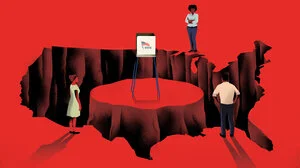
In 1872, just two years after the ratification of the 15th Amendment, white citizens in Wake County, North Carolina, alleged that 150 recently freed Black Americans were improperly registered and should be removed from the rolls under the state’s new voter challenge law. A century and a half later, in 2012, a group called the Voter Integrity Project filed challenges against more than 500 Wake County voters. Most were people of color. Local election officials dismissed almost all the challenges due to a lack of evidence. Still, legal protections have not deterred other groups from trying to exploit the state’s challenge procedures to disenfranchise voters of color. More than a decade later, ahead of the 2024 election, the leader of an 1,800-member “election integrity” group instructed volunteers to identify voters with “Hispanic-sounding last names” to be potentially challenged.

The first laws allowing private citizens to challenge their fellow citizens’ ballots or voter registrations were developed to enforce property, residency, or documentation requirements for voting. But between 1867 and 1880, three years after the end of Reconstruction, at least 21 states enacted or expanded laws that enabled voters to challenge other voters’ eligibility, often targeting Black communities.1
Today, most states allow challenges. Despite their proponents’ claims, these laws are hardly necessary for maintaining accurate voter rolls; election officials have better data and systematic processes for keeping the rolls up to date. Rather, they provide a way for private citizens to deter others from casting their ballots. Even if a challenger does not succeed in having a voter stricken from the rolls, that voter can still be intimidated or frustrated by the challenge and discouraged from participating in elections.
The following examples of challenges from the Civil War to the present, some of which are drawn from the Brennan Center’s 2012 report Voter Challengers, illustrate the ways in which these laws have disenfranchised voters of color.
Backtracking on Reconstruction
After the Civil War, vigilante violence such as lynchings and massacres were extralegal tools used to maintain white dominance. States also adopted legal tools to deter Black Americans from voting, including challenge laws. In 1870, for example, just a few months after Reconstruction ended in Virginia, the state legislature passed a law that empowered voters to challenge anyone who was “known or suspected not to be a duly qualified voter.” Newspaper accounts reveal how white citizens regularly took advantage of challenge laws to contest Black voters’ rights. In 1893, for example, Democrats in Richmond challenged Black voters — even those they knew to be qualified — and delayed them at the polls.

Three years later, in a June 1896 election, a local newspaper recounted how, in one Richmond ward, “Democrats had sent out challengers, and every colored man’s vote was contested.” The following November, white men from other wards in the city were again “sent out to challenge the colored voters, and otherwise hinder and delay” them.

In 1877, Democrats in the North Carolina legislature expanded a challenge law, requiring a voter to “prove his identity, or age, and residence, by the testimony of at least one elector, under oath” upon a registrar’s or any voter’s challenge. Many Black voters lacked a birth certificate, physician, or midwife to prove their age, and many gave their places of residence by colloquial names, such as “Coon’s Holly” or “Across the Railroad Tracks.” Registrars took these as failures to give complete mailing addresses.
These requirements provided easy pretexts for challenges. Any citizen could inspect the registration book and challenge a name on Election Day or on the Saturday or Monday preceding it. Allowing challenges so close to the election meant that, in areas where hundreds of Black voters might be challenged, election judges would struggle to hear all the cases before voting ended. Even if a challenged voter proved his identity and continued residence in the precinct and found another voter to give sworn supporting testimony, an election judge could disqualify the voter if he thought the evidence was insufficient or believed that the voter was ineligible. In 1889, the North Carolina legislature amended the 1877 law to require testimony “under oath, as may be satisfactory to the registrar,” granting these officials even wider discretion.
North Carolina’s legislature also passed laws to curb voting in areas with large Black populations. For instance, by the 1870s, Black candidates had been elected to Wilmington’s city government. The political power that Black voters had amassed drew state lawmakers’ attention: As a newspaper at the time put it, lawmakers needed to “relieve a great section of the State” from Black “dominance.” In 1877, the legislature passed a law that specifically permitted Wilmington voters to challenge other voters “known or suspected not to be lawfully entitled to register.” It gave registrars the power to decide challenges. It also encouraged challenges by imposing complex residency requirements: Voters had to reside in their ward 90 days before an election and specify the number of their lot, block, and ward. After the next legislative session, voters had to give their house number as well. Such laws helped white Democrats consolidate power.
Resentment of Black political power continued to be intertwined with challenge laws. In the 1890s, Democrats briefly lost statewide power to the biracial Fusion coalition of Populists and Republicans, which made prior registration presumptive evidence of a voter’s qualification and required 25 cents (roughly $10 today) to be paid per challenge, which would be refunded only if the challenge was successful. The state Democratic Party’s 1898 platform railed against the new law, claiming that it led to “fraudulent” registration in majority-Black counties and gave Black voters “an advantage over the white man.” In Wilmington, white elites incited fears about Black political power, leading to a massacre of dozens of Black people and a coup against the Black-led municipal government. When Democrats regained control of the state legislature in 1899, they restored the original challenge laws.
Race-Neutral Laws (on Paper)
Lawmakers who knew that even eligible Black voters would struggle to overcome challenges crafted a variety of tactics to suppress the Black vote.
Lawmakers exploited social segregation. Under an 1877 Florida law, for example, every voter challenged at the polls had to produce two witnesses from their election district to vouch for their qualifications. The witnesses had to be “personally known” to at least two polling place officials. But such officials were almost exclusively white and likely had little contact with Black residents. The same law imposed a literacy requirement for polling place officials, decreasing the likelihood that a Black Floridian would have an opportunity to serve. In Texas, the Democratic-controlled state legislature passed a challenge law in 1891 that applied only to major cities. That requirement came from a push to defeat Dallas’s incumbent mayor in the municipal election that year. Several hundred voters were challenged. One study found that 61 percent of challenged voters whom researchers could identify were Black, despite Black voters making up just 12 percent of the electorate.
Challenge laws were not limited to the South. Minnesota, for example, amended its challenge law in 1878 to require every voter who was challenged at the polls to complete an affidavit and produce a witness who could affirm they lived in the election district. The law applied only to Minneapolis and St. Paul — centers of the state’s Black population.
When laws were struck down on discriminatory grounds, new laws often sprung up in their place. After the Ohio Supreme Court overturned an explicitly racist challenge law, the state legislature enacted a new one that was race-neutral in its language but still enabled challengers to target Black voters.
Lawmakers also used challenge laws to amplify the discriminatory effects of criminal disenfranchisement laws. After the Civil War, many states restricted the voting rights of people convicted of felonies. Many southern states also did so for those convicted of misdemeanors, such as petty theft. The criminalization of minor violations enabled states to incarcerate Black people at high rates, and laws denying people with convictions the right to vote in turn made it easier to disenfranchise Black voters. In 1880 in Ocala, Florida, Democrats challenged the right to vote of a Black man named Cuffie Washington, who had been convicted a month prior of stealing three oranges. As another Black man who was challenged that same day said, “It was a pretty general thing to convict colored men in that precinct just before an election; they had more cases about election time than at any other time.”
Even baseless challenges could disenfranchise Black voters, as two congressional investigations revealed. In 1880 in Marengo County, Alabama, a voter named Silas Green claimed when challenged that he had been acquitted of “made up” charges, but he ultimately did not attempt to cast a ballot.
Challenge laws did not stand alone. They were part of a system of overt violence and intimidation and of legal barriers, such as poll taxes, literacy tests, grandfather clauses, and residency requirements, to prevent Black Americans from voting. By the early 1900s, Black turnout rates across the South had fallen to the single digits.
An Enduring Tool for Voter Suppression
Challenges remained a favored tool of white supremacists into the 20th century as the electorate diversified.
Restrictions on Latino voters’ access to the polls often came in the form of English literacy tests. Shortly after attaining statehood, in 1912, Arizona passed a law permitting poll challenges based on whether a voter could “read the Constitution of the United States in the English language.” This reflected an effort to block Mexican Americans from voting.
In 1937, 13 years after U.S.-born Native Americans attained citizenship, Montana enacted a law that canceled all voter registrations, required voters to re-register, and then required that county clerks cancel any new registration challenged by three registered voters in a sworn statement. Native voter registration in Big Horn County, which had a significant Native population, plummeted and did not return to prior levels until the 1980s.

Challenges continued to be used to suppress Black voters as well. Aiming to preserve “white primaries,” or primary elections in which only white voters could participate and which effectively decided general election winners in states where the Democratic Party predominated, a newspaper editor in North Carolina called in 1932 for a “systematic challenge of all those who are unqualified” as the only way to “wipe out that stain.” White Democrats ultimately succeeded in invalidating many voters’ registrations.
In Georgia’s 1946 gubernatorial race, candidate Eugene Talmadge urged white citizens to “wake up” and “disqualify and mark off the voters’ list three-fourths of the Negro vote in this state.” He pointed his supporters to Georgia’s challenge laws and mailed them thousands of challenge forms. State law required a challenger to “specify the ground of the challenge,” but the forms came pre-filled with all of Georgia’s requirements for voting listed; the supporter would simply write in the name of the targeted voter. Talmadge’s allies lodged a “laundry list of disqualifications,” baselessly alleging that voters were not residents, were not persons of good character, and could not read English. In the end, more than 16,000 Black voters were removed from Georgia’s voter rolls in 1946 — even though, as FBI investigators later noted, many of the challengers did not personally know the voters they challenged.
In the 1950s, as the push for civil rights swelled, milestones such as Brown v. Board of Education’s order to desegregate public schools drove white citizens to engage in “massive resistance.” Challenge laws helped. In Louisiana, for example, White Citizens’ Councils challenged the registrations of 8,552 Black voters across 10 parishes in 1956. In Ouachita Parish, White Citizens’ Council–inspired challenges led the county registrar to attempt to purge nearly 3,000 of the 4,000 registered Black voters. (A federal appeals court later rejected the purge on procedural grounds.)
Continuing Challenges Following the Voting Rights Act
Even though Congress passed the Voting Rights Act of 1965 to end discriminatory voting policies, challengers have continued to target voters of color.
Well into the 1960s, Arizona’s challenges provision led to voters of color being approached at the polls by private citizens and asked to read and explain index-style cards bearing excerpts from the Constitution. As former Phoenix city council member Adam Diaz recalled in The Arizona Republic, it was common for right-wing conservatives to show up at the polls and challenge prospective Latino voters: “Many of our people, very innocent people, just walked off. They were kind of intimidated.” The provision was not repealed until 1970.
In 1982, the Republican National Committee (RNC) settled a lawsuit claiming that it had mounted a challenge campaign targeting voters of color. The previous year, the RNC allegedly sent sample ballots to neighborhoods in New Jersey with large proportions of voters of color. When 45,000 of the ballots were returned as undeliverable, the RNC compiled challenge lists and requested that the people on the lists be removed from the rolls. Election officials determined, however, that many of these people had either moved or already been removed from the rolls, and they refused to purge the properly registered voters. In 1986, the RNC employed a similar tactic. As a result, in 1987, the parties revised the settlement to prohibit the RNC from engaging in initiatives targeting voters of color or conducting mail campaigns to “compile voter challenge lists.” A 2009 revision to the settlement discouraged “the use of challengers to confront potential voters and verify their eligibility at the polls.” The settlement expired in December 2017.
In 1999, a group in Hamtramck, Michigan, challenged more than 40 Arab American voters on the basis of citizenship. Once challenged, the voters were required by city election inspectors to swear that they were American citizens before they could vote. The U.S. Department of Justice investigated and later reached a consent order and decree that required the city to retrain poll workers on the nondiscriminatory application of challenge procedures.
In 2004, the Ohio Republican Party planned to station hundreds of challengers in selected voting precincts, with two-thirds of the prospective challengers to be placed in predominantly Black precincts. Two federal district courts blocked the challenges but were reversed by the U.S. Court of Appeals for the Sixth Circuit. Publicity from these cases, however, caused the Republican Party to instruct its observers to witness the voting process rather than make individual challenges.
That same year, after requesting a list of “all the Hispanic voters” in Atkinson County, Georgia, three residents filed preelection challenges against 95 presumptively Latino voters. One of the challengers said he presumed the voters were not citizens.
During a 2004 primary election in Bayou La Batre, Alabama, poll watchers challenged only Asian Americans’ right to vote. The poll watchers who lodged the challenges had been appointed by a white city council incumbent running against the first Vietnamese American candidate to contend for local office, and some of them confronted voters to their faces. The incumbent said, “We figured that if they couldn’t speak good English, they possibly weren’t American citizens.” As Truong Tran, an 83-year-old voter, recounted, rather than being allowed to join fellow voters to cast a ballot in just a few minutes on an electronic machine, he was directed to a separate area and instructed to fill out a provisional ballot. A U.S. Department of Justice investigation found that the challenges were racially motivated, announced it would monitor the treatment of Vietnamese American voters during the ensuing runoff, and precluded the challengers from continuing such practices.
The following year, a man in Washington state filed a document challenging the eligibility of hundreds of voters, most of whom were Asian American and Latino. The man said he had collected names of people who had registered to vote when they obtained or renewed a driver’s license and then challenged names that had “no basis in the English language” and “appeared to be from outside the United States.” Election officials concluded that the challenges did not meet the requirements of Washington’s challenge law and that any challenges would need to be filed separately for each name with accompanying proof. A local newspaper later contacted a dozen of the people on the list and discovered that all were U.S. citizens.
In 2011, poll observers associated with the Tea Party attempted to intimidate Latino voters during a primary in Southbridge, Massachusetts, in part by raising frivolous challenges against them when they came to vote. Due to concerns about voter intimidation, extra police officers were deployed to polling places to ensure voter access, and town officials requested assistance from the U.S. Department of Justice. One poll observer said he saw people leaving the polls crying. After the election, the town clerk reported that “some people left saying, ‘I’ll never vote again.’”
New technology could aid those looking to use last names as a starting point for racially discriminatory mass challenges. Recently, challengers have relied on software tools, such as EagleAI, that create extensive lists of voters and highlight potentially ineligible people using data from sources far less reliable than the information states can access through the Electronic Registration Information Center, an interstate voting data partnership. Election deniers have used such tools to compile mass challenges.
In a 2024 Georgia state senate hearing, the chief executive of EagleAI was asked about the software flagging names with special characters for removal from voter rolls. One senator observed that many eligible voters may have last names derived from languages such as Spanish, where accent marks or other diacritics would be expected. The chief executive dismissed the concern, responding, “But we do English.” Such comments highlight the risk that software tools like EagleAI will enable mass challenges against voters of color.
• • •
From the end of Reconstruction to the present, the use of challenges to disenfranchise voters of color reveals that the practice does not, in fact, serve to maintain the accuracy of voter rolls. Often behind this argument are thinly veiled and often racist ulterior motives. This history provides another reason to leave the management of voter rolls not to private citizens but to election professionals.
Charlotte Cox, Joseph Hennessy, and Ian Mundy-Jackson provided research assistance for this piece.
Endnotes
-
1
See Al. Rev. Code § 6–3–254 (1867); Cal. Pol. Code § 1230 (1874); Col. Rev. Code § 30–963–38 (1876); Conn. Gen. Stat. § 4–9 (1875); Act of Aug. 6, 1868, ch. 3021 [No. 45], § 7, 1877 Fla. Laws 71; 37 Il. Comp. Stat § 23 (1871); Act of May 13, 1869, ch. 148, § 6, 1869ss Ind. Acts 59–60; Iowa Code § 5–2–597 (1880); Kan. Stat. Ann. § 36–10 (1879); La. Stat. Ann. § 1397 (1870); Mich. Comp. Laws § 6.25 (1871); Minn. Stat. § 1.108 (1878); Act of Apr. 18, 1876, ch. I, § 37, 1877 N.J. Laws 342; N.Y. Rev. Stat. § 10–6–8 (1875); Act of Feb. 10, 1872, ch. 185, § 12, 1872 N.C. Laws 295; Oh. Rev. Code § 14–2–2939 (1879); Or. Rev. Stat. § 14.2512 (1874); Act of Apr. 17, 1869, § 5, P.L. 52, 1869 Pa. Laws 1557; Tenn. Code Ann. § 6–7–852 (1873); Va. Code Ann. § 3–8–17 (1871); Wisc. Stat. § 2.30 (1871).

