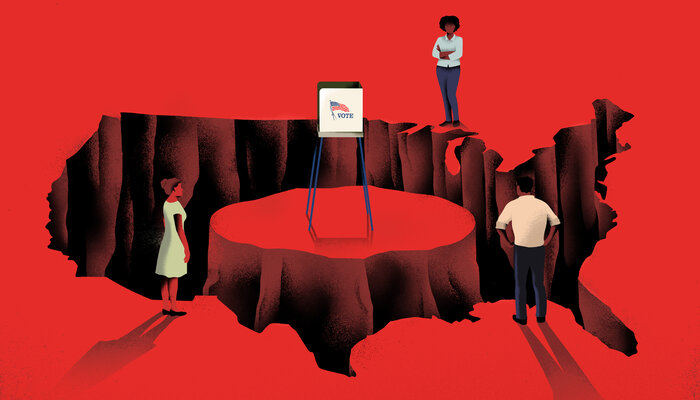
Mass challenges rarely find ineligible people on the rolls, but they impose significant burdens on voters and election officials. They add basically zero value while creating new costs. Even unsuccessful challenges can suppress the vote. Challenged voters often receive intimidating or confusing notices questioning their eligibility and may be forced to defend their right to vote in public meetings. Election officials are already required under federal law to keep rolls updated — a process known as list maintenance — and they have better tools and understanding than outsiders with minimal election expertise. Yet they must waste significant time and resources resolving challenges.
This report lays out the basics of voter challenges before turning to 2024 as a case study. Using public reporting and a large dataset compiled from dozens of public records requests, we found that at least 185,232 challenges were filed in 2024. The real number is likely higher: We sent public records requests to only a select number of jurisdictions where reporting indicated that challenges occurred, and we often received incomplete responses.
There is no reason to believe mass challenges will subside. Instead, they may now have the backing of a powerful new ally: the federal government. Supporters of mass challenges occupy key posts in the administration; the U.S. Department of Justice (DOJ) seeks to aggregate vast voter data, which it may give to challengers or use to pressure states to remove people from the rolls. These actions are part of a broader campaign to sway elections by driving down turnout, justify disenfranchisement and interference, and undermine confidence in order to more easily overturn results.
In some ways, the concerns surrounding mass challenges are greater than ever. The Trump administration has collected massive amounts of Americans’ personal data. Several agencies have experienced large-scale data leaks, exposing millions of voters’ sensitive information. Challengers may intentionally find or unwittingly come across confidential data that they have no business seeing.
In addition, as part of a federal government effort to create a national voter file, the DOJ has issued a memorandum of understanding that specifically allows it to share sensitive data with any “contractor” who “perform[s] duties related to the Department’s list maintenance verification procedures.” The DOJ reportedly intends to share this data with outside groups that file mass challenges and met with the founder of one such group, EagleAI, to discuss data sharing.
Challengers have proved themselves persistent and adaptive. Early this year, for example, the creators of EagleAI reportedly launched a new program with “modifications and enhancements” known as ELLY and, through the North Carolina Election Integrity Team, an election denier group, pitched the tool to the North Carolina State Board of Elections as a means to find fraudulent voters.
States and Congress can pass laws to alleviate these harms. They can ban mass challenges and implement safeguards to ensure that challenges are limited to cases that have unique, reliable information and won’t impact eligible voters who have followed all the rules. To protect U.S. elections, responses to and precautions against mass challengers must be proactive and consistent.