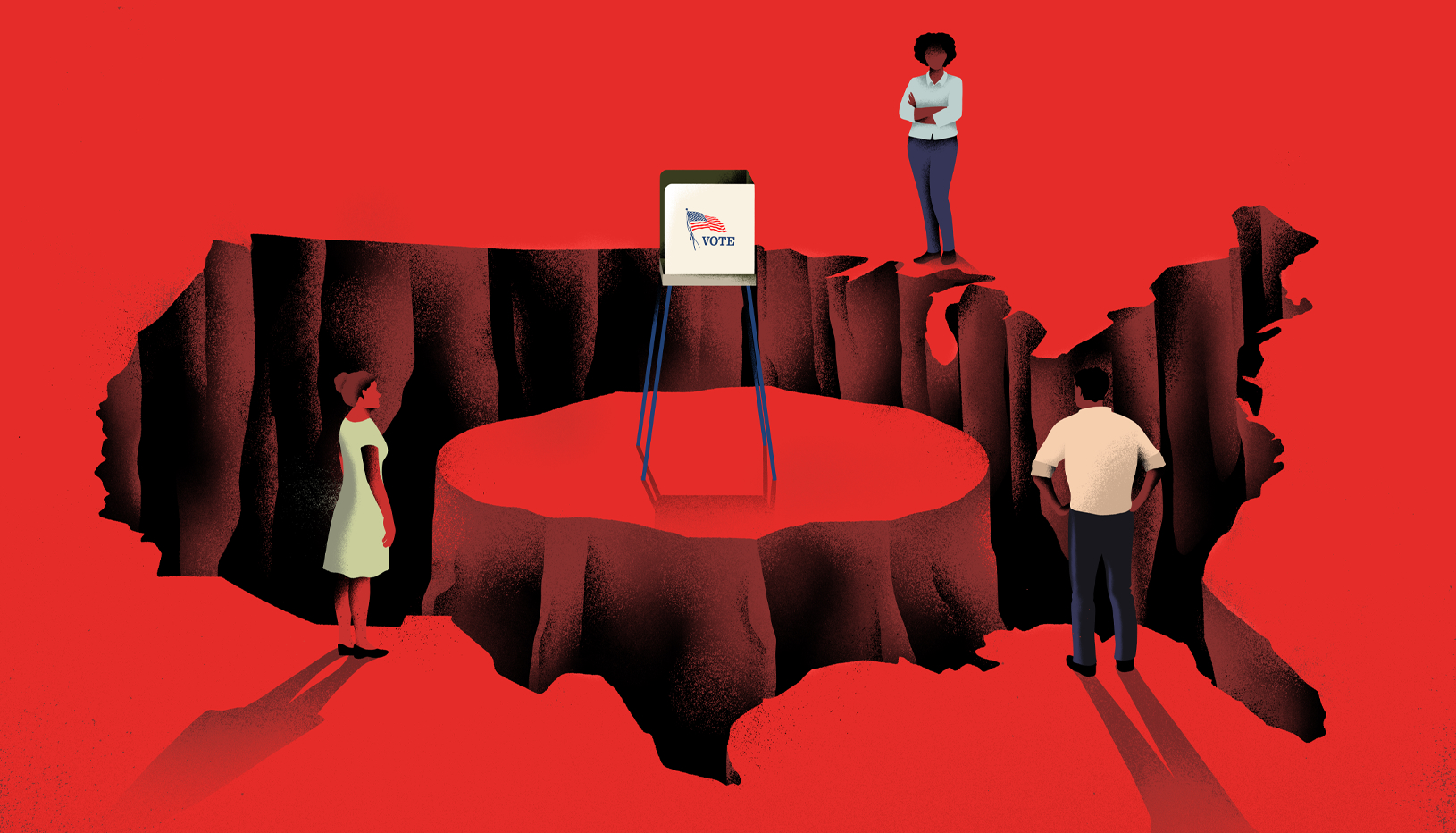

In March 2025, two members of the DOGE team communicated with a political advocacy group that was seeking to “find evidence of voter fraud and to overturn election results in certain States.” The group was trying to match Social Security records with copies of voter files that it had acquired. One of the DOGE team members even signed a “voter data agreement” with the group. While it’s still unclear if DOGE members shared any personal Social Security data, the revelation raised a scary prospect: that the federal government might collaborate with election deniers looking to block American voters from the ballot box.
Most states have laws that allow voters to challenge other voters’ eligibility. Baseless mass challenges to hundreds or thousands of voters at a time are a growing problem. They threaten voters. They swamp overburdened election officials with unnecessary work. And they fuel mistrust in our elections.
As my colleague Andrew Garber lays out in a new report, the rise of the election denier movement and technological advances have come together to make mass voter challenges a persistent problem in recent elections. Our research found that at least 185,232 voter challenges were filed in 2024 alone, and that follows hundreds of thousands of challenges filed in the previous two election cycles.
Mass challenges by private citizens add little value because of the work by dedicated and professional election officials to keep the voter rolls clean. In contrast, these challenges rely on shoddy data-matching techniques often designed to confirm wild conspiracy theories.
Until recently, these challengers have been outsider activists. The idea they may now have the support of the federal government sends chills.
The Trump administration’s efforts to support baseless voter challenges go beyond a couple of stooges at DOGE. As we’ve been tracking for months, the Justice Department has been pressuring states to cough up their voters’ confidential personal data. Like all the Trump administration’s election interference efforts, this pressure campaign has mostly fallen flat, with courts consistently blocking the requests. But 16 states were all too happy to hand over their voters’ data. And when they did, the DOJ asked them to sign a data security agreement that contained an ominous loophole in the protocols for private contractors with whom the department might share voter data. Meanwhile, one of the primary perpetrators of mass challenges in recent years, Rick Richards, creator of a mass challenge software called EagleAI, reportedly met with the DOJ in 2023 to demonstrate the tool. “They like it,” he claimed.
For these reasons and more, Garber predicts that “challenges will continue to be an integral strategy in the playbook to undermine the democratic process” in this year’s elections and beyond.
Promisingly, the Brennan Center’s research also reveals that thanks to the tireless efforts of election workers and federal legal protections, the vast majority of mass challenges do not lead to inappropriate purges of voters from the rolls.
But even small rates of disenfranchisement are a concern, and challenges can confuse or intimidate voters even when they don’t formally block them from voting. And the harms of mass challenges extend much further.
For one thing, they create tremendous burdens on election officials during a time when they should be preparing for the daunting task of running elections. In 2022, in Gwinnett County, Georgia, it took between 5 and 10 experienced elections staff working “all day, every day, six days a week” to evaluate the 37,000 challenges filed by just one organization, VoterGA. In the end, not a single ineligible voter was removed as a result of the challenge.
You may be asking yourself: If these mass challenges do nothing to help election officials and only make their jobs more difficult, why do our laws allow them? There must be some good reason why we let Americans challenge their neighbors’ right to vote. Well, no, not really. The answer, as is so often the case when it comes to restrictive voting laws, is racism.