Resource
California: Protections Against Intimidation of Voters and Election Workers
This resource details state and federal laws protecting against the intimidation of voters and election workers and the disruption of the voting process.
Part of
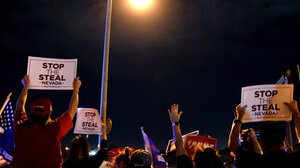
Voters in California have the right to vote free from intimidation under federal and state law.1 Federal law broadly prohibits intimidation, threats, and coercion throughout every stage of the election process; more information on the federal laws that apply to all states can be found here. In addition, the following actions are specifically prohibited by California law:
- Using or threatening to use force, violence, or tactics of coercion or intimidation to compel another person to vote or refrain from voting. This includes, but is not limited to, blocking access to voting locations; presenting false information about voter eligibility requirements or criminal consequences for voting; aggressive questioning of voters based on their perceived race or gender identity; and aggressively questioning voters about their citizenship, criminal record, or other qualifications to vote.2
- Electioneering within 100 feet of a voting location, including a drop box.3
- Speaking to a voter within 100 feet of a voting location about their vote with the intent of dissuading that person from voting.4
The below information addresses the laws that serve as guardrails against specific threats of intimidation.
Voter Challenges
California law provides the following restrictions on challenges to a voter’s eligibility:
- Only a poll worker can challenge a voter’s eligibility at a polling location.5
- The precinct board is required to compile and maintain a list of voter challenges in that precinct.6
- If a member of the precinct board receives any document or list concerning the residency or other qualifications of voters with the suggestion or request that the member challenge the voters on the list, the precinct board should immediately contact the county elections official.7
- If persistent voter challenges cause delays or create an intimidating atmosphere that discourages voting, the board shall discontinue all voter challenges.8
- Knowingly challenging a person’s right to vote without probable cause or on fraudulent or spurious grounds is a misdemeanor. Conspiring to engage in mass, indiscriminate, and groundless voter challenges solely for the purpose of preventing voters from voting is a felony.9
The National Voter Registration Act (NVRA) provides additional safeguards to protect voters from mass challenges before an election:
- The NVRA expressly recognizes that National Change of Address information is not sufficient on its own to serve as the basis for canceling a voter’s registration.10
- The NVRA prohibits the systematic removal of voters from the rolls within 90 days of a federal election.11
Intimidation of Poll Workers and Election Officials
In addition to federal protections against the intimidation of election workers, it is a violation of California law to attempt or to actually intimidate, threaten, or coerce election officials, including poll workers and temporary workers, who are exercising their duties to administer an election.12 Interfering with the ballot counting and election certification process is a felony.13
Guns, Law Enforcement, and Federal Agents at Polling Places
It is a felony to carry a firearm at a polling place, vote center, drop box, or place where votes are being counted, including on the streets and sidewalks immediately adjacent to these locations.14 Additionally, a person may be civilly liable for monetary damages for intimidating voters and election workers. If the individual was carrying a visible firearm or imitation firearm while interacting with or observing a voter or election worker, they are presumed to have engaged in intimidation.15
It is also prohibited in California to:
- Station uniformed peace officers, private guards, or other security personnel at or in the immediate vicinity of a voting location.16
- Hire or arrange for any other person – including private guards, security personnel, or an officer or agent of a local, state, or federal law enforcement agency – to be stationed at or in the immediate vicinity of a polling place or county elections office without written authorization from the appropriate elections official. The Secretary of State and the Attorney General may override the election official’s authorization.17
- Wear a shirt, hat, or other display that indicates a person is with “Election Security” or “Ballot Security” or apparel or accessories with any semblance of a logo or display that might be confused with any private guard or security company or government agency.18
Federal law limits the presence of the military and other armed federal agents at polling places:
- It is a felony for any federal official to send troops or armed persons to a polling place, unless “such force [is] necessary to repel armed enemies of the United States.”19
- It is a felony for a member of the military to intimidate voters or interfere with elections.20
Door-to-Door Intimidation
California and federal law prohibit canvassing efforts that are used to intimidate voters.21 Any voter who receives a visit from a privately organized canvassing group does not have to answer any questions and should report any incidents of intimidation to their local officials. Additionally, it is a felony in California to impersonate an election official.22
Endnotes
-
1
See, e.g., 18 U.S.C. §§ 241, 594; 52 U.S.C. § 10101(b); Cal. Elec. Code §§ 18540, 2300(a)(4).
-
2
Cal. Elec. Code § 18581; Robbie Anderson (elections counsel, California Secretary of State Elections Division) to All County Clerks/Registrars of Voters, Re: Primary Election: Voter Intimidation; Prohibited Voter Challenges, August 28, 2026, 2, https://perma.cc/M6T3–7M4B.
-
3
Cal. Elec. Code § 18370.
-
4
Cal. Elec. Code § 18541(a)(1).
-
5
Cal. Elec. Code § 14240(b); Anderson to All County Clerks/Registrars of Voters, April 28, 2026, 3.
-
6
Cal. Elec. Code § 14240(b); Anderson to All County Clerks/Registrars of Voters, April 28, 2026, 3.
-
7
Cal. Elec. Code § 14240(c).
-
8
Cal. Elec. Code § 14253; Anderson to All County Clerks/Registrars of Voters, April 28, 2026, 3.
-
9
Cal. Elec. Code § 18543.
-
10
Cal. Elec. Code § 18543.
-
11
Cal. Elec. Code § 18543.
-
12
Cal. Elec. Code § 18581(a)(3).
-
13
Cal. Elec. Code § 18502(a).
-
14
Cal. Elec. Code § 18544; Cal. Penal Code § 26230(a)(25).
-
15
Cal. Elec. Code §§ 18581(b)(1), 18582(a).
-
16
Cal. Elec. Code § 18544.
-
17
Cal. Elec. Code § 18545.
-
18
Anderson to All County Clerks/Registrars of Voters, April 28, 2026, 2.
-
19
18 U.S.C. § 592.
-
20
18 U.S.C. § 593. See also 52 U.S.C. 10102.
-
21
18 U.S.C. §§ 241, 594; Cal. Elec. Code § 18581(a)(3).
-
22
Cal. Elec. Code § 18575.
More from the Laws Protecting Voters and Election Workers from Intimidation series
-
Florida: Protections Against Intimidation of Voters and Election Workers
This resource details state and federal laws protecting against the intimidation of voters and election workers and the disruption of the voting process. -
Georgia: Protections Against Intimidation of Voters and Election Workers
This resource details state and federal laws protecting against the intimidation of voters and election workers and the disruption of the voting process. -
Michigan: Protections Against Intimidation of Voters and Election Workers
This resource details state and federal laws protecting against the intimidation of voters and election workers and the disruption of the voting process.
Stay up to date