Voting After Criminal Conviction

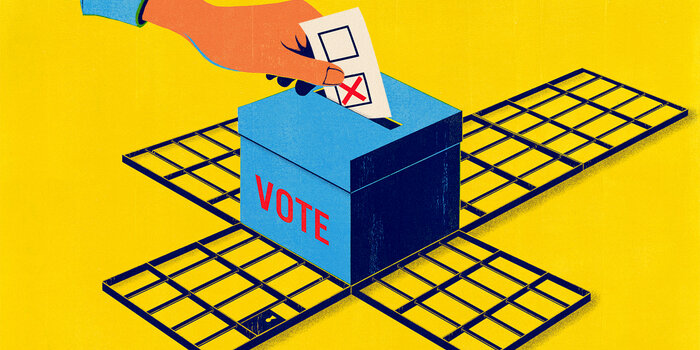
Voting is both a fundamental right and a civic duty. However there remains one significant blanket barrier to the franchise: 5.3 million American citizens are not allowed to vote because of a criminal conviction. As many as 4 million of these people live, work, and raise families in our communities, but because of a conviction in their past they are still denied the right to vote.

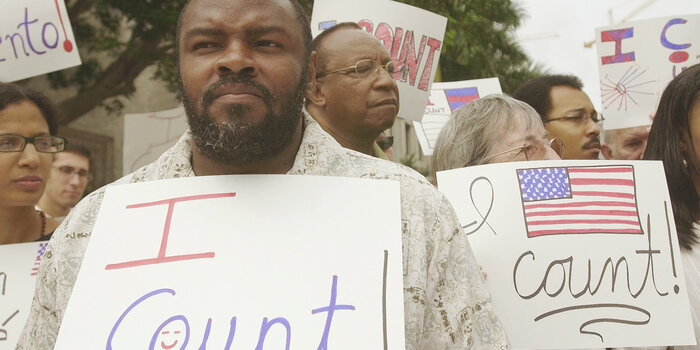
Felony disenfranchisement laws in the United States are deeply rooted in the troubled history of American race relations, and the disproportionate racial impact of these laws continues to this day. Nationwide, 13% of African-American men have lost the right to vote, a rate that is seven times the national average. Given current rates of incarceration, three in ten of the next generation of African-American men across the country can expect to lose the right to vote at some point in their lifetime.

mapThe Brennan Center works nationwide to restore the vote to people with criminal convictions. Our work, which operates on both the federal and state level, includes litigation, legislative and administrative advocacy, and public education. In 2007, Rhode Island, Florida, and Maryland all expanded the franchise for people with felony convictions.

State Laws – For a state-by-state guide on felony disenfranchisement laws around the country, view our map. View our state work here

Federal Legislation, D.R.A. – In the last Congress (the 111th Congress), the Brennan Center worked with Senator Feingold and Representative Conyers on the Democracy Restoration Act. The Democracy Restoration Act was introduced on July 24th, 2009 as H.R 3335 and S. 1516. The Brennan Center is working with Rep. Conyers and Senator Cardin to re-introduce the bill for the 112th Congress soon.


logoSelected Press Clips

See recent news, articles and commentary about felony disenfranchisement, here.

Press about the D.R.A., here

Gerald Benjamin, Blair Horner, John Kaehny, and Lawrence Norden
Erika Wood and Liz Budnitz
with Garima Malhotra
introduction by Charles Ogletree
The Right to Vote Project
Criminal Justice Transition Coalition

More Publications

Farrakhan v. Gregoire

The Ninth Circuit held that Washington's criminal disenfranchisement law violates the Voting Rights Act. The decision is the first in the country to find that, due to racial discrimination in the state's criminal justice system, the felony disenfranchisement law results in the denial of the right to vote on account of race.

Simmons v. Galvin

Simmons vs. Galvin was a challenge to the Massachusetts law which disenfranchises people with felony convictions from voting while they are incarcerated.In a 2-1 decision, the First Circuit Court of Appeals reversed that ruling and held that no claims can be brought against Massachusetts law under the Voting Rights Act. 

Johnson v. Bredesen

The Center filed an amicus brief with the 6th Circuit of the U.S. Court of Appeals in support of the plaintiff’s challenge to Tennessee’s voter restoration law denying voting rights to individuals with felony convictions. Individuals are not eligible to vote until they pay child support arrears and/or restitution. 

More Court Cases

In Debate, GOP Candidates Present Blurred View of MLK’s Vision

Candidates sparred over laws to restore the right to vote to former prisoners, and attacked the Voting Rights Act.

Expanding the Vote Abroad, Suppressing It At Home

I can clearly recall the image sprawled across the cover of my local newspaper back in 2005: a photograph of a group of Iraqi women, dressed in niqabs, proudly waving their purple inked thumbs shortly after casting their ballots in the first election following the fall of the Hussein regime.

A Missed Opportunity in Nevada

Today, Gov. Brian Sandoval ignored the bipartisan will of Nevada's elected representatives and vetoed A.B. 301, walking away from a significant opportunity to expand voting rights and realize justice in Nevada. The bill aimed to make Nevada's voting rights restoration process more efficient and help the state move closer to a fair and fully functioning democratic system.

More Blog Entries

Illustrations by Risko

Senate Bill Would Restore Voting Rights for Millions of American Citizens

The Brennan Center for Justice and a coalition of allied civil rights advocates lauded Sen. Ben Cardin (D-MD) today for introducing the Democracy Restoration Act of 2011.

Civil Rights Groups Urge Florida Clemency Board Not to Further Restrict Voting Rights

Four of the nation’s premier civil rights organizations sent a letter late Friday to Florida’s Board of Executive Clemency, asking the board not to further restrict Floridians’ voting rights by requiring every individual with a criminal conviction to apply for restoration of their civil rights after a new waiting period that could be as long as five years.

New York Passes Landmark Legislation to End Prison-Based Gerrymandering

New York - Last night, the New York State Legislature passed a landmark piece of legislation to end prison-based gerrymandering. This bill comes on the heels of another important policy, passed and signed into law in June, intended to educate people with felony convictions about their right to vote in New York.

More Press Releases

Democracy Restoration Act

The Democracy Restoration Act is federal legislation introduced Rep. John Conyers and Sen. Ben Cardin to restore voting rights upon release from prison.

Testimony in Support of Nevada AB 301

Lee Rowland gave testimony in Nevada in support of AB 301. The American Probation and Parole Association also submitted testimony in support of the bill.

Restoring the Right to Vote in Nevada

Lee Rowland will testify before the Assembly Legislative Operations and Elections Committee on March 22, 2011 to support The Right to Vote bill, A.B. 301.

More Legislation & Testimony

The Other 5 Million

The right to vote is one of our most fundamental rights. In recent weeks, the national news media has focused significant attention on the swath of restrictive voting laws that several states have enacted this year, zeroing in on a particularly alarming statistic: namely, the 5 million eligible voters whose access to the polls has been undermined by these new restrictions on the franchise.

Secrecy, Fear, and the National Security State: A lecture on American democracy

Fritz Schwarz delivered a lecture entitled "The National Security State and Other Dangers to Democracy" on November 11, 2010, at the John F. Kennedy Institute for North American Studies at the Free University of Berlin.

"Crisis and its cousin fear always make it tempting to ignore the wise restraints that keep us free. That is not new. But America has been living in an atmosphere of crisis for an unusally long time."

Rachel Maddow Speaks about felony disenfranchisement

MSNBC’s Rachel Maddow speaks about Virginia Governor McDonnell’s new requirement to require people convicted of non-violent felonies to write an essay in order to get their voting rights restored..

More Analysis & Commentary